Train Hopping 101
MINIMALIST LIVING, CAMPING ON LOW OR NO DOLLARS, AND ENJOYING THE FRUITS OF THE LANDSCAPES AROUND YOU. MY THOUGHTS ON FREEDOM.
I have been working on this guide for the last decade as I’ve searched for identity and worked on improving myself through my wanderings. I’ve worked on my emotions, my well-being and in some ways have used riding freight trains and wandering around as a means to heal and meditate.
This guide goes much deeper than the surface of riding freight trains, hitchhiking, and wandering. It’s about chasing freedom because it’s slowly becoming harder and harder to be free, not just in America, but throughout the world. In the dawn of AI and the age of Surveillance Capitalism, it will only get worse, but I’ve spent the past decade trying to look past the doom and gloom and just live. I’ve tried my best to explore and live minimally in-between society. I’m not looking to be the best at anything. I’m not looking to have a career. I’m not looking to own fancy stuff or live strictly for money, which are very much societal norms. It is completely fine to live this way. For me, it’s about finding the simple pleasures in life, hobbies I like, new activities and experiences, picking up new skills at new jobs in new places, and finding a way to entertain myself in this lifetime that costs little to no money. The way I live is how I want to spend my time and the effort I put into it opens the door to serendipitous experiences that more or less started from simply walking down the road or catching a train or picking a place on a map to go and find any work because I wanted to go there. This instability is discomforting at times, but has pushed me both mentally and physically to do things I never thought I was capable of and that’s why this guide is more than just freight trains. It’s a mindset. Live how you wanna live even if people and the government try to dissuade you from doing so.
WHERE TO FIND WORK & WHAT KIND:
FUND YOUR TRAVELS WITH SEASONAL & TEMPORARY WORK OR JOBS THAT ARE ALWAYS LOOKING FOR EMPLOYEES
You should have a general plan of what type of work you want to do in order to fund your travels. Work is a necessity for me because I take pride in what I do and I don’t want to live off of handouts. I have traveled on and off over the past decade and a common theme I see in the train community is that no one wants to work. Everyone hates CAPITALISM. Everyone hates THE MAN. Blah. Blah. Blah. No shit, dude.
That’s all fine and dandy, but these same kids that preach anarchy are living off the hands of strangers who are often poor and middle class citizens. I understand work isn’t for everyone. I understand that it sucks and whether you work or not is up to you. But keep in mind, getting paid for your labor will make your life much easier. Food stamps are not enough money to live off of and flyin’ signs on the street corner and spangin’ for money is just not a way to live long term. In the ten+ years I have wandered on and off between work, I HAVE never met a single person who was happy living this way. The innocence wears off after a while. The adventure of wandering around penniless not knowing when your next meal will be is only romanticized in books. In the real world it just sucks.
I am not your mother or father and I’m not passing any judgment on those who do or do not work. That being said, for me, I need to work at least part of the year. It helps with my mental health and makes me feel like I’m relying on no one but myself when I’m wandering around between jobs and living how I want. If I want to splurge on an energy drink or food I don’t feel the obligation to sacrifice my pride by holding a sign or asking for spare change because I’m able to support myself and I don’t need to do this.
What works for me, may not work for you. I’ve already been there and I know what works for me. I’d rather work part of the year and wander a few months when I can. There are other activities I like to do outside of just travel, but they all are intertwined to some extent with being outside or getting away from the real world and the hardships of society and work.
That being said, regardless of whether you fly signs or ask for spare change, you should be willing to do any kind of work available regardless of the wage and be able to live off that wage while you’re traveling. When I’m wandering around I try to live off no more than $10/day but in recent years I find myself edging closer towards $15/day with inflation. This is anywhere from $300/month to $450/month, which in the scheme of work, is really not much work at all. After a few days of working I can wander for 30 days. Typically with the work I’ve done in the past and now, this has dictated what season I travel.
When I worked in WNY and packed parachutes, I worked all summer from about June to mid-September. Then I wandered around the other 9 months during the year with short stints in areas I liked and other short bouts of work here and there. Now, living in the northeast, my life is very different. I generally work from fall through the New Year at the restaurant, ski resort, or doing property maintenance when work is freely available and it is busy, and I tend to leave during winter or a piece of spring, only coming back for a short while before I head out again for summer. Summer is busiest for work, and also the best for travel. I tend to not want to work harder for the same pay when I could use this time to see new places and gain new experiences. That is the flaw of the hourly wage. There is no incentive for me to work harder while I’m doing more work. The overtime or few extra hours in a pay period is not worth it to me. Especially when I have worked a good portion of the year and don’t really need to.
To get you started,here are the different types of jobs I have worked in that have helped me sustain my lifestyle of traveling on and off over the last decade between employment.
RESTAURANT JOBS
All of these positions can be temporary or seasonal, and most of the time if you do a good job, and give notice, they will let you come back. For over five years I have quit the same restaurant over 8 times and gotten hired back every time, working full time until I no longer need to work, then I leave to ride trains and wander around, and when I’m back in town, I hit them up and they find a place to put me. It is usually within walking distance of our studio apartment, which has helped out a lot over the years. Note: this is much easier to do in small towns. If you’re trying to do this in a big city, tough luck. Jobs are more competitive in the city than the country so I don’t know how well you would fair unless you were a really good employee and had a great relationship with co-workers and your employer.
These are specific jobs in the restaurant industry that have helped me travel around the USA and other countries:
- Bussing
- Doesn’t pay all that well, but you’ll always have work and you can squirrel away cash from tips that you don’t have to file taxes on, which you can just set aside for your travels.
- Dishwashing
- The pay is pretty horrendous, but if you don’t mind working for a company like Xanterrorist (Xanterra Resorts), then it isn’t so bad. You’ll be working in a national park where you can hike and camp on your days off. Most of the time you can live off of scraps and food that you scavenge, and living in a dorm setting is fairly cheap. They take it off your paycheck. Yes, working for a huge corporation sucks, but pick your poison. I tend to just work small stints, scavenge as much as possible, hike, and quit when I am done exploring a place. They will always hire you back because they need people so don’t feel bad if you quit mid-contract. It doesn’t really matter as long as you put in your TWO WEEKS NOTICE. This is super important. In the years I have worked for Xanterra, I only ever completed one 2-month contract at Crater Lake in 2017. When I worked for the Grand Canyon in 2016, I quit. When I worked at Zion in 2023, I quit also. But I put my notice in so I can get hired back down the road when I choose to go on a hobocation.
- Cold Bar Prep
- Another job in the kitchen that pays more than Dishwashing and maybe the same as bussing or a little less. It’s not very exciting, but you’ll be able to squirrel away money to travel. You’ll get more hours than dishwashing as it’s always harder for the kitchen to find staff for these positions since you actually need to know how to prepare food, plate, follow recipes, etc.
- Cooking
- Another job in the kitchen that pays more than dishwashing, bussing, and prep, but is also A LOT MORE FAST PACED AND STRESSFUL. If you think you like cooking, after you become a line cook you will probably hate cooking ever again after this position. Not for the slacker to say the least.
- Serving
- Probably the most lucrative option to save money. You just have to be willing to mask, put on your happy face and be willing to interact with the 1% and people who have most likely never worked for a living. They can be rude and obnoxious, treat you like you are subservient, but remember to stay calm, collected and respectful and you will make decent money. Remember: rich people live off ego and what others think about them. In most cases, you will get tipped a minimum of 20% of their bill unless you really suck at your job or botched their order. They don’t want to look cheap or have rumors spread around that they don’t tip. It only makes them look bad.
- Barista
- Did it for a short time when we were traveling around New Zealand. Hated it. The pay was shit and people are very particular about their coffee so anything less than excellent is deemed unworthy. I would not recommend this job, but again, it’s an example of you take what you can get.
NATIONAL PARK JOBS
XANTERRA : VAIL RESORTS : ARAMARK : DELAWARE NORTH
- Monopolies suck, we all agree on that. They come in and push out small businesses and they kill mom and pop shops, and local industry, but if you want to work and travel to National Parks without getting kicked out for not having permits while camping/hiking there isn’t really a way around it unless you work for NPS. Do yourself a favor and only take temp contracts of at most 3 months. Normally I look for dishwashing positions. These jobs will allow you to see Crater Lake, The Grand Canyon, mountain towns across the United States, etc. and provide somewhat affordable housing. If the housing expenses are too unreasonable do not work there then. Look for mid-season job openings so you don’t have to sign your life away for too much time. Enjoy the outdoors, camping, hiking, partying, etc.
- My mindset with these jobs is the following: I know going in I am going to be exploited for cheap labor. Whatever. That is life. I go in with the mindset that I will meet new people who like to travel, hike, spend time outdoors. I try to establish friendships, even if they’re temporary, and try to get out and go any chance I get when I’m not working. Basically, the month, or two or three that I spend at whatever National Park before I quit, is like a hobocation. The money I make there covers my living and adventuring expenses and sometimes I even walk away with a few bucks.
- The key thing to remember here is these companies don’t care about you. They are too big and disorganized to care. Don’t let it bother you. Go in with a game plan and once you’ve had enough just put your two weeks in and quit. It does not matter if you signed a 3 or 6 month contract. Just put your notice in and leave. They will hire you back down the road and you can go on a hobocation again. I do this every few years between employment when I cannot find work and it is the best of both worlds.
FORESTRY JOBS
- ARBORIST
- If you plan to do this without a licensed business just make sure you have insurance, charge cash or get a check written out to your name and offer a service that other businesses don’t. For instance, offer to take down trees, but not remove the leftover brush. This can save the customer tremendous amounts of money and put a big chunk of change in your pocket. I worked for a guy in New England who does this for a living. The money is quite lucrative. If it was my business, personally, I would recommend opening an LLC, paying taxes, and getting insured. At least if something were to happen, your business would get sued, not you.
- GROUND CREW AND ROPES
- If you are inexperienced, like myself, just learn to run a saw and get a job as ground crew first. You’ll be doing a lot of grunt work, but you can learn ropes, knots, and how to cut, eventually fell trees and take this skill anywhere with you in the US.
- TRAIL CREW MAINTENANCE
- You can apply for seasonal work on a trail crew working for non-profits that offer free housing for the summer and fall seasons and pay a reasonable wage to their employees, either working on special projects construction crew, on rock crew, or as a caretaker or ridge runner. (Reasonable in that you do not pay for housing...if you already pay rent somewhere then the wage is not that lucrative.)
SKYDIVING JOBS
Again, this is another specialized industry I fell into from my travels. I used to go to DROPZONE.COM and look for job openings for parachute packing. A lot of drop zones will teach you how to pack tandem rigs which pay anywhere from $7 to $15 dollars per pack job depending on the area you are in. It is a good way to save up a decent chunk of change and become financially independent. Some may require you to open an LLC, some don’t. These jobs typically do not pay cash out right, but some do offer cheap, free or affordable housing.
Note: Dropzone.com is no more. That used to be the go-to place back in 2013 to 2017 where I would apply to jobs to find work. It landed me a gig in Hawaii on the North Shore packing chutes on Oahu. Now you either have to have a Facebook account and find personal groups to apply to jobs, or you can just reach out to places via email and inquire about any openings. They are pretty traveler friendly, but it might be hard to get your foot in the door.
You can pack tandem and sport rigs, edit videos, or work on manifest. If you get your D license and get certified to jump tandems, you can do that too. But for most of us, the most lucrative and low responsibility role that will allow you to make money and travel is packing tandem parachutes and living on-site in a tent or cheap on-site housing.
CRAIGSLIST
Need I say more. Post an ad on CL looking for work or reply to jobs that pay cash and seem trustworthy. You may get screwed, but it’s a quick way to make a buck and it’s better than shitty Day Labor Services that take half your wages.
CONSTRUCTION / PROPERTY MAINTENANCE GIGS WORKING FOR INDIVIDUALS / COMPANIES OR THE MOUNTAIN
Sometimes you get lucky and hit gold when you’re not even expecting to. I took on an apprenticeship under a Master Carpenter whom I did property maintenance work for in Vermont and moved down to South Carolina to help him on his house. Construction jobs usually pay cash, and although they can be physically demanding, these skills are always needed in every state. You can usually find cash jobs by looking up ads, standing out front of Home Depot, or asking around town if anyone knows of anyone hiring. I got this gig literally because I went to work everyday and did my job. When work died down at the mountain and there was nothing left to do, I ended up working for this guy who needed a lot of help on his property. Even if I didn’t know what I was doing I was willing to learn.
Note: A lot of these will require ID, but having pride and working for your travels will make you appreciate them more. It will be more of a choice than a decision.
TRAIN HOPPING IN NORTH AMERICA
Please Note: There are many other riders out there, with way more experience than me, and more riding time. I am not an expert nor will this guide make you one. You will make mistakes. Riding freight is dangerous and I don’t advise doing it. However, this guide was created to give information to those interested in approaching this topic more safely. You won’t learn how to ride freight from the Internet or YouTube, but hopefully you can learn from my personal experiences, my mistakes, and use the resources provided within to better understand the seriousness of the railroad, its inherent risks, and the importance of safety around the train tracks.
RAILROAD FOLKLORE
This isn’t going to teach you to ride trains either, but it’s nice to read stories from other riders to see what you’re getting yourself into. Some of them are romanticized and sound so awesome you just wanna quit your job and pack up your shit and leave, but there are other stories that aren’t quite as enticing, like taking spikes to the head, tripping over switches and nearly getting limbs sliced off, hearing about your friend getting hit by a train and dying, getting concussions from slipping while getting off the train, siding out in a tunnel and not knowing if you’ll die from Carbon Monoxide poisoning, etc. The list goes on…take a read if you want. If not skip ahead.
RAILROAD FILMS, DOCUMENTARIES & OTHER FOOTAGE
FREIGHT HOPPING MOVIES AND DOCUMENTARIES
Catching Out (2003)
Hobo by John T Davis (1992)
The Beggars of Life
Train on the Brain
Riding the High Line
Emperor of the North Pole
Freeload
Steel Don’t Bend
Long Gone
Who is Bozo Texino?
Hobo Stobe Archive
These all used to be links, but have since been taken down over the years and I do not have the time to re-upload them at the moment. If there is a movie that interests you. Feel free to reach out and I'll try my best to upload it.
TRAIN HOPPING 101 DISCLAIMER
Before I go over any of this information about catching out I just want to clearly state the following:
DISCLAIMER: RIDING FREIGHT TRAINS IS DANGEROUS. I HIGHLY DISCOURAGE ANYONE FROM TRAIN HOPPING AS A MODE OF ALTERNATIVE TRAVEL. I WILL NOT BE HELD LIABLE FOR ANY INHERENT CHARGES, INJURY AND/OR DEATH IF YOU CHOOSE TO TRESPASS ON THE RAILROADS.
With that said stick to hitchhiking, tramping or bicycle touring before you consider riding freight.
This page was created to preserve the train culture that I romanticized about back when I first started riding freight in 2016. I created this tutorial from resources I’ve read over the years from counterparts like Duffy Littlejohn, Squat The Planet, Limey Pete, and my own personal experiences. It in no way is a substitute for actually RIDING FREIGHT and I am not trying to promote this either, but it’s your life. You’re gonna do what you wanna do so at least read this to have a better understanding of what it entails and again, by no means am I an expert. All I am doing is giving you a taste of information for those actually interested in taking the plunge so you go into this understanding the SAFETY and don’t get yourself killed or maimed because even the best die. No one is invincible. I am in no way responsible for your actions.
This resource is provided for FREE because too many people have watched the likes of videos by Brave Dave and other hooligans out there and actually believe that’s how you ride trains. It’s not. That’s how you get killed by being a showboat and a dumb ass. Be safe out there guys. This is not a game. You don’t have to fit a stereotype or mold, wear patches, have dreads, a dog, a Carhartt jacket, a banjo, and be dirty as fuck to ride freight…just be yourself. Be smart. Always be looking to learn and do not trust any information given to you in the train yard. Some people are dicks.
Most importantly RIDE SOBER and treat the train yard and the train with the utmost respect. Use all of this information as both inspiration and a resource and if you are one of those people who thinks this will blow up the scene then ask yourself, “Why did I even get into traveling?” Take a step back to self reflect because you’re supposed to be free out there and that includes being free of judgment.
The videos and photography show the landscape of this country in a romanticized fashion. Actual riding has a lot of down time when you’re waiting for your train, running around finding the right train, siding out, and spending long hours clunking around on junk.
THE HOBO ETHICAL CODE
An ethical code was created by Tourist Union #63 during its 1889 National Hobo Convention in St. Louis Missouri. This code was voted upon as a concrete set of laws to govern the Nation-wide Hobo Body; it reads this way:
1. Decide your own life, don’t let another person run or rule you.
2. When in town, always respect the local law and officials, and try to be a gentleman at all times.
3. Don’t take advantage of someone who is in a vulnerable situation, locals or other hobos.
4. Always try to find work, even if temporary, and always seek out jobs nobody wants. By doing so you not only help a business along, but ensure employment should you return to that town again.
5. When no employment is available, make your own work by using your added talents at crafts.
6. Do not allow yourself to become a stupid drunk and set a bad example for locals’ treatment of other hobos.
7. When jungling in town, respect handouts, do not wear them out, another hobo will be coming along who will need them as bad, if not worse than you.
8. Always respect nature, do not leave garbage where you are jungling.
9. If in a community jungle, always pitch in and help.
10. Try to stay clean, and boil up wherever possible.
11. When traveling, ride your train respectfully, take no personal chances, cause no problems with the operating crew or host railroad, act like an extra crew member.
12. Do not cause problems in a train yard, another hobo will be coming along who will need passage through that yard.
13. Do not allow other hobos to molest children, expose all molesters to authorities, they are the worst garbage to infest any society.
14. Help all runaway children, and try to induce them to return home.
15. Help your fellow hobos whenever and wherever needed, you may need their help someday.
16. If present at a hobo court and you have testimony, give it. Whether for or against the accused, your voice counts!
TRAIN HOPPING SAFETY
WHY YOU SHOULD NOT HOP FREIGHT TRAINS?
It’s Extremely Dangerous. I hear stories of kids losing limbs, or worse, dying. It can happen to anyone, look no further than Hobo Stobe. I don’t encourage anyone to hop freight. In fact, you should seriously stick to hitchhiking and the bus if you are new to traveling by foot anyway. This guide is only here for people who are looking to gain more knowledge on the subject of train hopping. It’s not really intended to teach you how to hop a freight train. There is far too much involved in learning that you can’t obtain from reading textbooks.
It’s Illegal. You hear about all the stories of people hopping trains, ending up places, but you never often hear much about what happens when they get caught. Sometimes you are searched, so if you have drugs on you, your charges will increase. They might give you a citation or court date. You could end up in jail. You could get pulled off in the middle of nowhere and left there…yes, this happens also.
Violent. The tracks can be a violent place, from the random strangers you meet by the rails to the parts of town you hoof it through to get to the hop out, you could get mugged, assaulted, or worse depending on gender, race and sexuality.
Ending up in the middle of no where. It’s possible to end up in areas you did not plan to stop, or hop the wrong train and put yourself in the mountains when you were trying to go to the desert. Often times the more experience you have, the less chance you have of this happening, but without a scanner and even not knowing specifically if they are dropping your car off, there is no way to know exactly where you will go.
BEFORE HITTING THE STEEL – GUIDES ON RAILROAD SAFETY AND ETIQUETTE
First and foremost before getting into what train cars to ride, and so on, please review train safety. You should not enter the yard before you read up on your train safety or at least have a general idea as to what NOT to do.
MY QUICK SAFETY GUIDELINES
Always keep your head on a swivel whenever you are crossing the tracks or actively roaming around through the train yard. Trains can move at any time and just because they are stopped does not mean they aren’t working or breaking up and could move at any moment. Amtrak also flies through areas so it is always a good idea to pay attention to what you’re doing. The tracks aren’t a joke. If you treat it as such you will end up maimed or dead.
Know your limits. If you can’t make split second decisions and catch on the fly safely identifying your rideable car, then don’t. Only catch out on stopped trains as it’s safest and only get off stopped trains too. If you can’t catch on the fly then what makes you think you can get off a moving train safely?
Don’t catch on the fly in the rain and don’t catch anything faster than running speed. A good way to judge speed is by being able to count all three bolts on the wheel. If you can’t count them then it’s going to fast, but also it depends on your athleticism. If you can’t run alongside the ladder safely and grab onto the rungs, then it’s going too fast. This involves both speed, stamina and strength, don’t underestimate it and don’t overestimate your abilities.
Always have three points of attachment when standing up on a porch or moving between freight cars in the yard to find your train. NEVER STEP ON OR BETWEEN THE COUPLERS (KNUCKLE) OF STOPPED OR MOVING TRAINS. This is the way to lose a foot or get crushed and smooshed by a train.
Never go between Autoracks, walk around the train to get to your train.
Don’t ride suicide or empty coal, there’s really no reason to, but if you must, make sure you do not fall asleep and always see where you’re at when stopped in a yard or siding to see if you can switch to a better freight car.
If you ride a cab do not mess with the controls or hit the horn and leave it in the condition you found it.
Do not ride the roof, but if you want to check it out, make sure the train is going very slow and creeping, and have three points of attachment at all times (this should be noted you should have much experience before doing this).
Hide at crossings when you are riding through cities or if you can see cars waiting perpendicular to the tracks. These people will call you in along with most rail fans. So stay hidden through cities and you can be more in the open in the country.
Don’t ride in packs of kids and with packs of dogs, it’s a good way to get caught, injured or die.
RIDE SOBER. I cannot stress how important this is…If you plan on drinking do not get on the train please. Almost every horror story starts with kids being drunk.
Don’t hop between wells and porches on moving trains.
Account for slack action when riding, especially on junk, because it could fling you off the train. Just use common sense and don’t treat train hopping as a joke or like a playground like a lot of these hipsters do on YouTube, Brave Dave, Stu the Jew…the list goes on…this is not an episode of Bear Grylls.
Never go under a freight car for any reason.
It should be duly noted that this information should not be replaced with real experience. JUST BECAUSE YOU’VE READ THIS GUIDE DOES NOT MEAN YOU SHOULD HOP A FREIGHT TRAIN.
Instead, use it as a supplement. Go to a yard, scope it out, try to find someone to teach you and take you under their wing. Explain that you are green, and don’t know what the hell you’re doing. No one wants to hear that you have been riding for 7 years, 365 days a year without taking a shower, and you’ve ridden every line. Be honest. Be real and don’t be gullible. If you feel uneasy being around some tramps trust your gut and move along. Not everyone is friendly. Not everyone will give you the right information or any information at all.
They’ll see through your bullshit, and you’ll look like a dumb ass, some people refer to these types as “oogles,” call ’em whatever you like. Don’t be this person. Instead, be a good judge of character, and see if someone will show you the ropes. Understanding the train yard comes with experience and every yard is different. Even the big yards can be a bit tricky and you should always be out there learning, no one knows everything.
If you have the thirst for a red-blooded adventure, the will to learn, you realize the dangers, and are careful, and smart about it, then you’ll be fine out there.
If you have not already purchased additional reading then I highly recommend two of the following books to start you off, which will cover a variety of safety about hopping trains along with enough information to make you a professional hobo or at least a “smart greenhorn.” I recommend purchasing a paperback copy of:
BOOKS ON HOW TO HOP A FREIGHT TRAIN
DUFFY LITTLEJOHN: HOPPING FREIGHT TRAINS IN AMERICA
THE BLACK BOOK OF FREIGHT TRAIN RIDING BY LIMEY PETE
TRAIN HOPPING DOWNLOADS
Other reading material and digital maps that are worth carrying along with you on your train hopping adventures…keep these PDFs on your phone or print em out at the library.
2017 CLASS I RAILROADS GOOGLE MAPS
THE PROFESSIONAL RAILROAD ATLAS OF NORTH AMERICA
2018 VAGABOND BIBLE FOR TRAIN HOPPERS, HITCHHIKERS AND BICYCLE PUNKS! - Provided by Hobo_Huck of StP and the subreddit /r/vagabond section. I did not re-upload this file...this is huckstah's upload.
2016 FREE CAMPGROUND SITES - This is just a list of free camp sites where camping is legal. I have shared this because sometimes these places offer free showers and this can help you out on the road. These aren't by the tracks for the most part, but it's just another useful resource.
All these books are great resources for the greenhorn and even if you have hopped before they are great resources for the seasonal train hopper as well. They should also be read multiple times to ensure you are safely catching out.
Now that you have the book knowledge let’s talk about the proper gear you need. It’s pretty much the same gear I use for hitchhiking.
FREIGHT HOPPING AND HITCHHIKING GEAR
- 5.11 Tactical Backpack (Black) (43 Liters) (OR any equivalent pack from the Army Navy Surplus Store) At this moment in time, I am older and have opted to switch to a lighter pack. I am currently using a Kelty 45 Liter pack that is much lighter and just as durable.
- Tarp or ACU digital camo military bivy sack
- 0 or 20 degree sleeping bag, any Coleman or cheap bag at Walmart will do, or if you get lucky you can buy one on eBay for cheap. I got a Kelty 0 Degree Cosmic Down bag for ~100 USD because of a defect in the zipper. Again...it’s gonna come down to weight. I have had this Kelty Cosmic 0 Degree for several years now. I think that is the route to go for warmth and weight wise.
- In recent years I really enjoy traveling with a hammock/bug net to keep myself off the ground.
- You can also travel with a bicycle if you know what you’re doing. It’s easier to get to the outskirts of the city and find places to camp.
CLOTHES
- Under Armour long sleeve or equivalent thermal layer (2)
- Long Johns or similar thermal underwear
- Ski pants, Kuhl pants, Fleece lined pants any of these are good, I typically have all three, but I ride in any weather any time of year.
- Base layer of some kind, something warm and preferably dark so it does not look too dirty after days of bumming around
- (2 to 3) pair smart-wool socks (Darn tough socks are pretty rad…they make the best socks I’ve ever worn, super warm and durable, expensive though)
- Waterproof Boots (This is the most important piece of equipment for your travels...take care of your feet. Jungle rot, and staph infection are no joke) So get some good, reliable boots and make sure they are WATERPROOF. I cannot recommend brands because I used to go with ASOLO, then the next pair I got sucked. Then I switched to VASQUE, great pair of boots I had for 2 years, stayed waterproof, bought a different pair from VASQUE, sucked. The list goes on and on. Right now I bought a new pair of Brahma Boots that are pretty rugged, I got them at a thrift store brand new for 5 bucks. We shall see. If not it’s back to the drawing board.
- Waterproof gloves
- Hat and/or baclava to cover your head and neck
- Poncho, trashbag or goretex type outer layer to keep you somewhat dry from the rain, otherwise bum it under a bridge somewhere or just find shelter out of the rain. Waterproof jackets are only waterproof for so long, and ponchos/trashbags are not breathable after a while so you get soaked from condensation and sweat. Better to just find shelter somewhere.
- Winter jacket/Carhartt jacket/Kuhl Rugged jacket…any of these to keep you warm.
- Note: Make sure all your clothes are generally dark. You aren’t trying to draw attention to yourself when snooping through the yard. Also, it just makes you look cleaner so in case you need to hitchhike out of somewhere you don’t look like a complete destitute bum.
OTHER HELPFUL GEAR
- Anker External Battery Pack to charge electronics ~ 20,000 MaH (optional) but better than bumming out front of stores trying to steal electricity to charge your phone. This way you can find a nice spot in industry to charge your battery bank, and in grab it in the morning and have a nice 4 to 5 charges for your phone.
- Headlamp (Petzl recommended)
- Phone that connects to WiFi – doesn’t necessarily need service. Right now I have a Google Pixel 9 with GrapheneOS loaded on it.
- Railroad Atlas either in electronic or paper copy form (helpful not necessary)
- Road Atlas either in electronic or paper copy form (helpful not necessary)
- Crew Change (not necessary by any means, but helpful) either in electronic or paper copy form
- USB cables and adapters
- Passport if leaving the USA
- Water Key
- Medical supplies: Bacterin, tweezers, band-aids, lighter, nail clippers, razor, baby wipes, toothbrush and paste, etc. (I don’t really carry all of these tbh, but it’s worth mentioning.
- Anything you need to stay clean on the road (travel shampoo/conditioner/bar of soap). Take your showers in the sinks at Fast Food joints or use your water key behind an industrial building to wash up and be sure to clean up your mess so they don’t lock the bathrooms to the public or lock the valve.
- Thermarest sleeping pad and a lightweight blowup thermarest pad as well. Traveling in the cold temperatures you need a high R value or you will freeze your ass off regardless of what degree sleeping bag you have.
- Ear plugs
- Trash bag to use as a liner for your gear to keep it dry from the rain and inclement weather
- Knife or canopener
- Lightweight Camp Stove (Preferably the older models that are the big Coleman canisters you can buy freely at any Walmart) / small pan or pot for cooking
- At least 3 Liters of water. I use the 1.5 L bottles of mountain dew and fill them up with water
- Baofeng UV 5R Scanner with Railroad channels pre programmed for your needs (Not necessary, just takes up space, I do not even use one)
- Tutorial here – Cheapest Scanner
THE TRAIN YARD
FINDING YOUR TRAIN
So over on the /r/vagabond sub-reddit group they actually have some decent information for greenhorns about train hopping. I especially enjoy huckstah’s post on finding your train as it’s very important and a basic knowledge of identifying where you are at in the “YARD” you are in will make your life much easier, and safer. Basically there is a classification yard and a departure yard. You will want to AVOID the classification yard at all costs. Normally the yard tower is located here, which means security, because this is the most dangerous part of the yard, bulls, cameras, etc.. Trains will be getting humped together here, moving back and forth along the tracks, getting ready for a future departure. Do not get on trains here or even be in this part of the yard.
However, the departure yard will be what you want to look for. Here cars will be lined up for a future departure not too far off in the future, and anything stopped on the main lines will depart even sooner as trains on the main line are more than likely changing crews.
Check out the sub-reddit post to get a better visual on the difference between the classification yard compared to the departure yard, where you should be hiding, etc. As Huckstah has stated, all this information is publicly available on the Internet on train hopping forums or rail fan websites. I have compiled this list here to put many resources together in one spot for your reading pleasure. Check out the vagabond group here to find your train.
WAITING FOR YOUR TRAIN
So I hate to tell you this, but a majority of train hopping
is WAITING. Yes, that means sitting around and being a bum. The longest I have waited for a train was about 2.5 days in Huntsville, AL at a siding and 5.5 days in McAdam, NB when I got stuck in Canada. If you don’t have patience and you cannot entertain yourself and sit around while you wait for your train then this is not the sport for you.
This is not a weekend warrior sport, some people live their lives hopping trains because they have felonies or it’s out of choice, so if you think this is something you can pick up as a weekend hobby and make it back to your 9-5 job come Monday morning, you can’t. With that said, I will assume you have some prior
experience hitchhiking. If you have experience hitchhiking then you know you will have the patience to wait for a train because sometimes you might sit by a gas station or on-ramp for days before getting rides…that’s part of the unknown, part of the adventure.
ENTERTAINMENT – MOVIES, TELEVISION, APPS & GAMES
So what do you do to pass the time while waiting for your train? I like to read books, write train hopping stories and hitchhiking stories in my spare time, play video games on my phone or watch movies, depending on how close I am to a power supply, etc. Do yourself a favor if you have the funds for a smartphone (regardless whether you have service or not), and there is free WiFi somewhere, grab the following apps.
∙Cinema HD – This is an Android app for smartphones which searches the Internet for new movies, and TV shows, available for streaming/download. Link this with a Real-Debrid account if you want to...in recent years their service is pretty terrible, but it’s still better than Netflix and any of that bullshit.
∙Mobilism – This is not a specific Android app per say, but register on this site to grab mobile warez for your phone. I would only recommend installing cracked apps on a compartmentalized profile in GrapheneOS. Otherwise you risk exposing your whole phone to malware instead of just one profile.
BOOKS
You can find books on annas-archive or Z-library and import them onto your Kindle. You don’t need to be connected to an Amazon account to do this. Or you can be old school and just read books in paper format.
WHAT TRAIN CARS TO HOP ON WHEN RIDING FREIGHT?
Rather than reinvent the wheel I will link to a few websites that have already covered this important information on rideable train cars with some short blurbs of my own on cars. Hobo Shoestring’s blog covers in great detail many of the train cars you can ride with a strong emphasis on junk train cars. Check out the list from Hobo Shoestring here, “What Train Cars Hoboes Ride!”
That covers most of the safe junk train cars to ride, but what about high priority Intermodal cars? How do you know what is safe to ride and what’s suicide or unsafe to catch on the fly? Well, below is a great read posted by Kokomojoe from Squat the Planet that covers IM/DS, “Safe Rideable Intermodal Cars!”
Now, with those few links above that should give you a general idea on what is safe to ride and what you should look for when trying to catch a train on the fly or stopped in the yard.
You want to ninja your way in and out of the yard as quickly as possible and minimize your time in the yard altogether. The longer time you spend dillydallying around, the better chance you have at being seen by a worker, a bull, yard cameras or the yard tower, either landing you a citation, warning or jail time. So be smart. Take the road less traveled to find your catch out spot that gives you a good view of the yard and just hang out. Read a book, watch a movie or play a video game on your phone while you wait for your train and remember that train hopping is more of a waiting game than riding.
Other small tips and information that will help you on your train hopping adventures comes from experience and gaining riding time, but I will give my own personal suggestions below. Typically, I catch out near the yard on stopped trains, but there are instances where I might catch a train on the fly near the throat of the yard. In order for this to happen, the train must be rolling slow enough for me to run up along the ladder, clasp both my hands, and swing my knee into said rung to pull myself up and onto a car. You can normally figure out if the train is rolling slow enough by counting the bolts. If you can count all the bolts, it is most likely rolling at a slow enough speed, if you cannot count the bolts and they look like a blur, it is going too fast and is much more dangerous. You should also only catch on the fly towards the front of the car. This way if you fall, you are not immediately drug under the wheels of the next car and you have some time to fall away from the train.
With that said, how do you know how fast is too fast for you? Well, experience…some people refuse to catch on the fly. It’s dangerous, people die, lose limbs, take spikes to the head and get concussions (I am guilty of it). So it is a risk. Know your limits and don’t take risks you don’t need to if you’re unsure of your abilities. If you aren’t athletic then do not catch on the fly at all.
THE BOXCAR
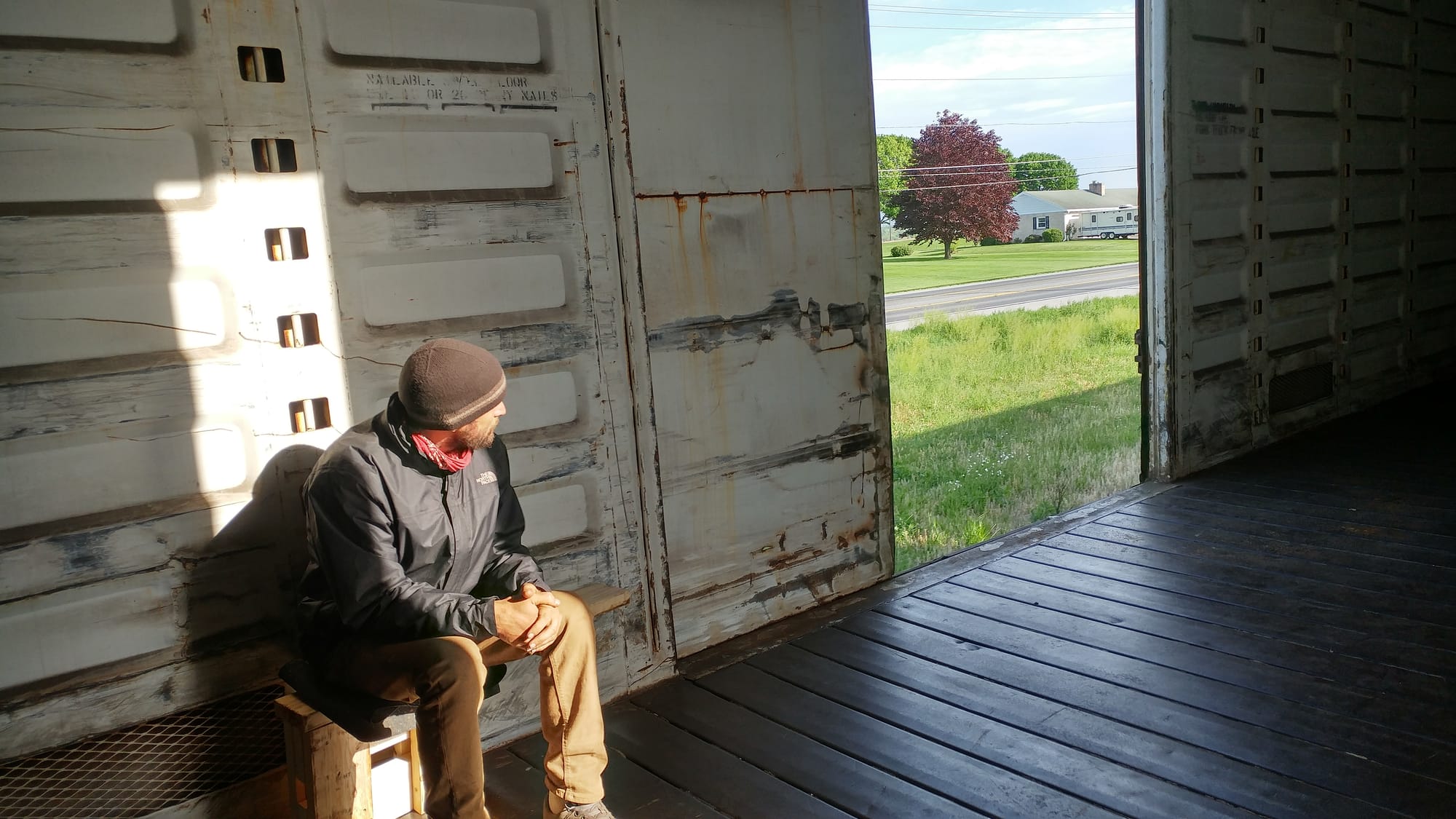
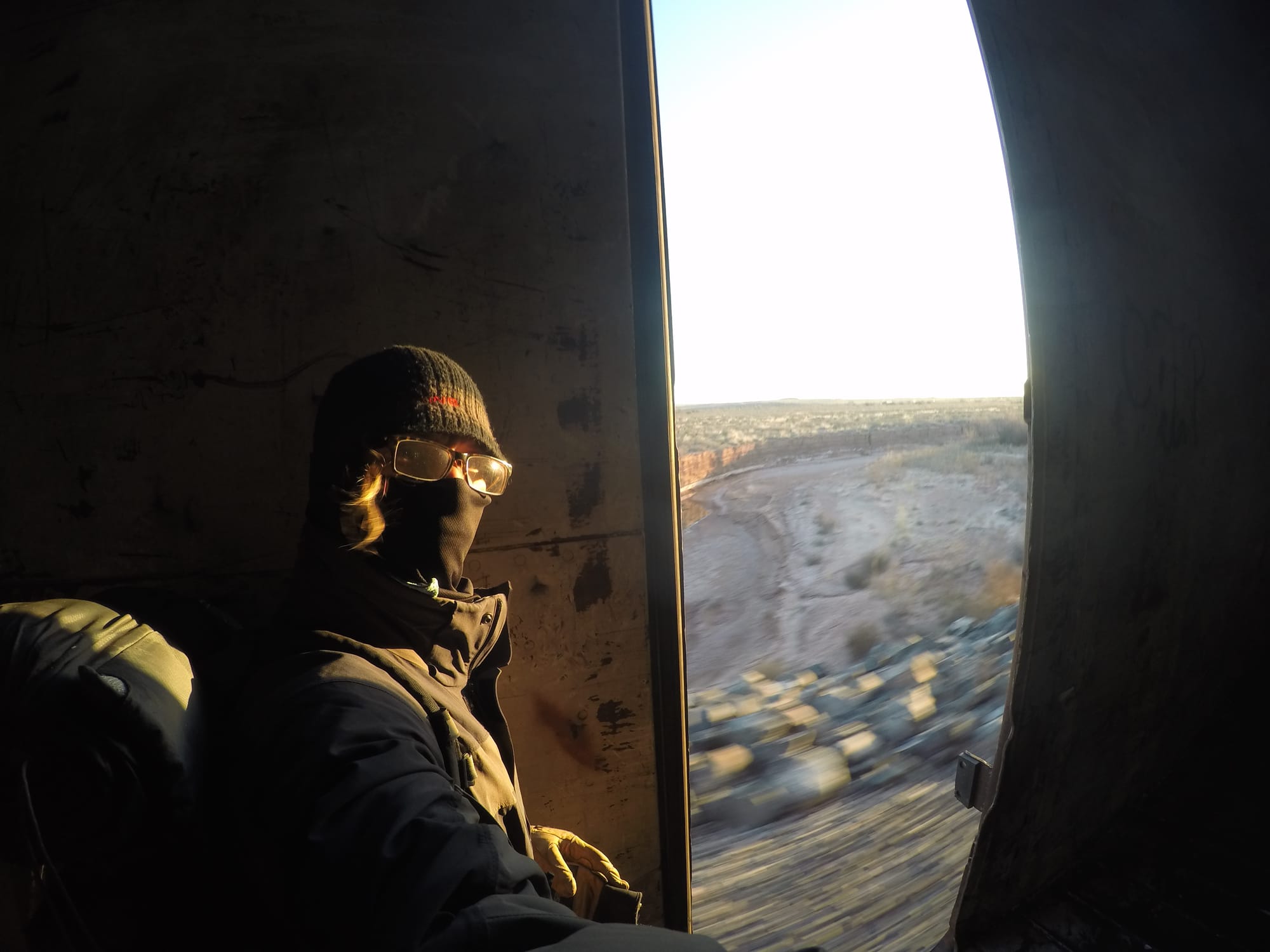
The boxcar is an ideal ride to keep you out of the rain. Often times, nowadays, doors are closed on empties making it a little harder to get into them, but don’t let this deter you from finding a ride. As long as it is not loaded and does not have a seal on the door, then you should be able to find your ride and open it up as you get more comfortable moving about the yard and staying hidden. On older boxcars where you cannot lock the door, it is important to stick a railroad spike in the door tract to keep the door from closing shut and locking you inside. Many hobos have died from this in the past so always keep this in mind because the crew might not check that car for weeks at a time since junk is low priority. DO NOT RIDE PLUG DOORS. THERE ARE CLEARANCE ISSUES WITH THESE IF THE DOOR IS OPEN AND YOU COULD DERAIL THE TRAIN IF IT HITS THE SIDE OF A BRIDGE OR CONCRETE PAD, ETC. THESE ARE THE NEWER BOXCARS WHERE YOU SPIN THE HANDLE TO OPEN THE DOOR AND CAN LOCK IT IN PLACE. NEVER RIDE THESE.
THE GONDOLA
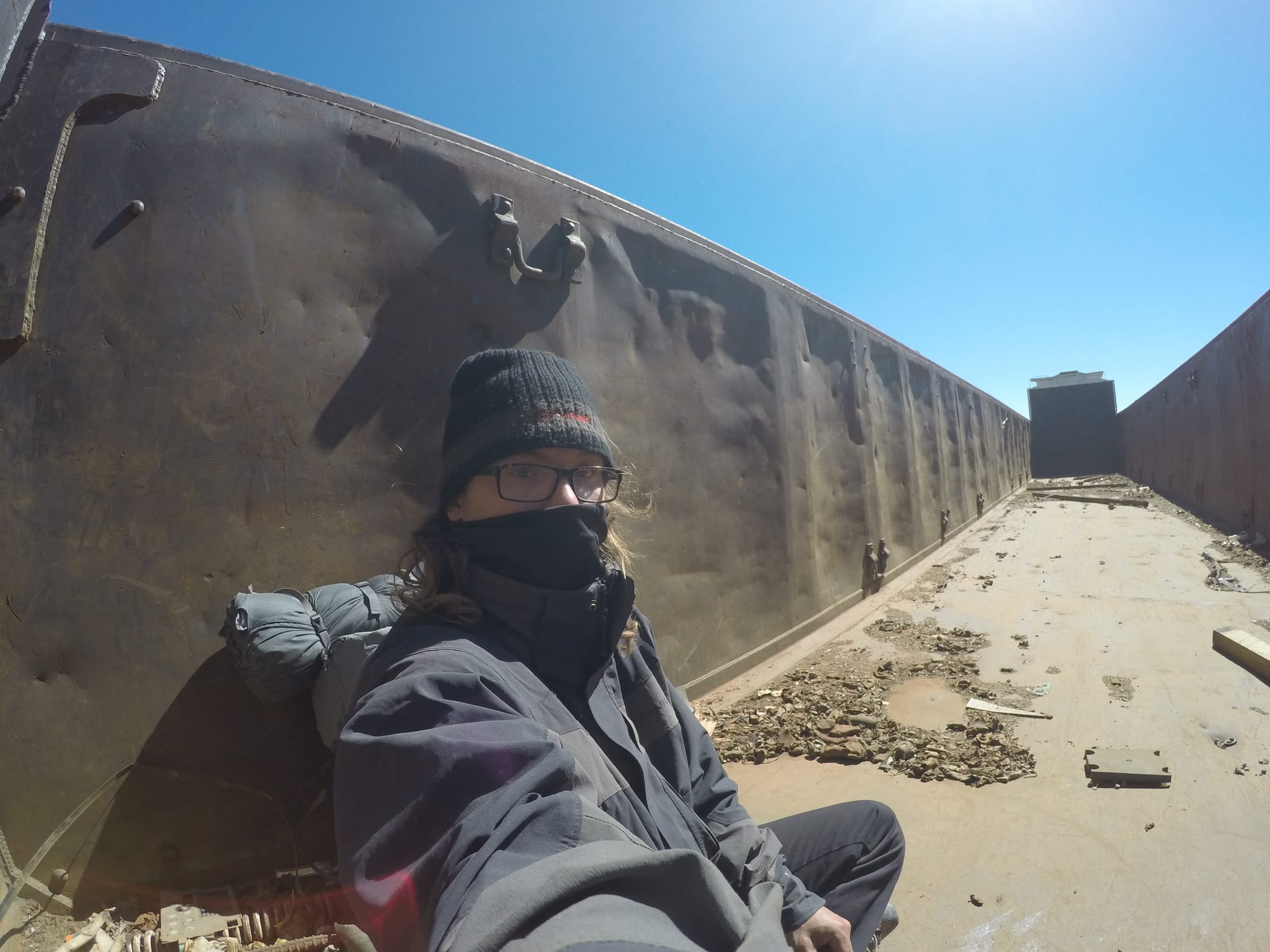
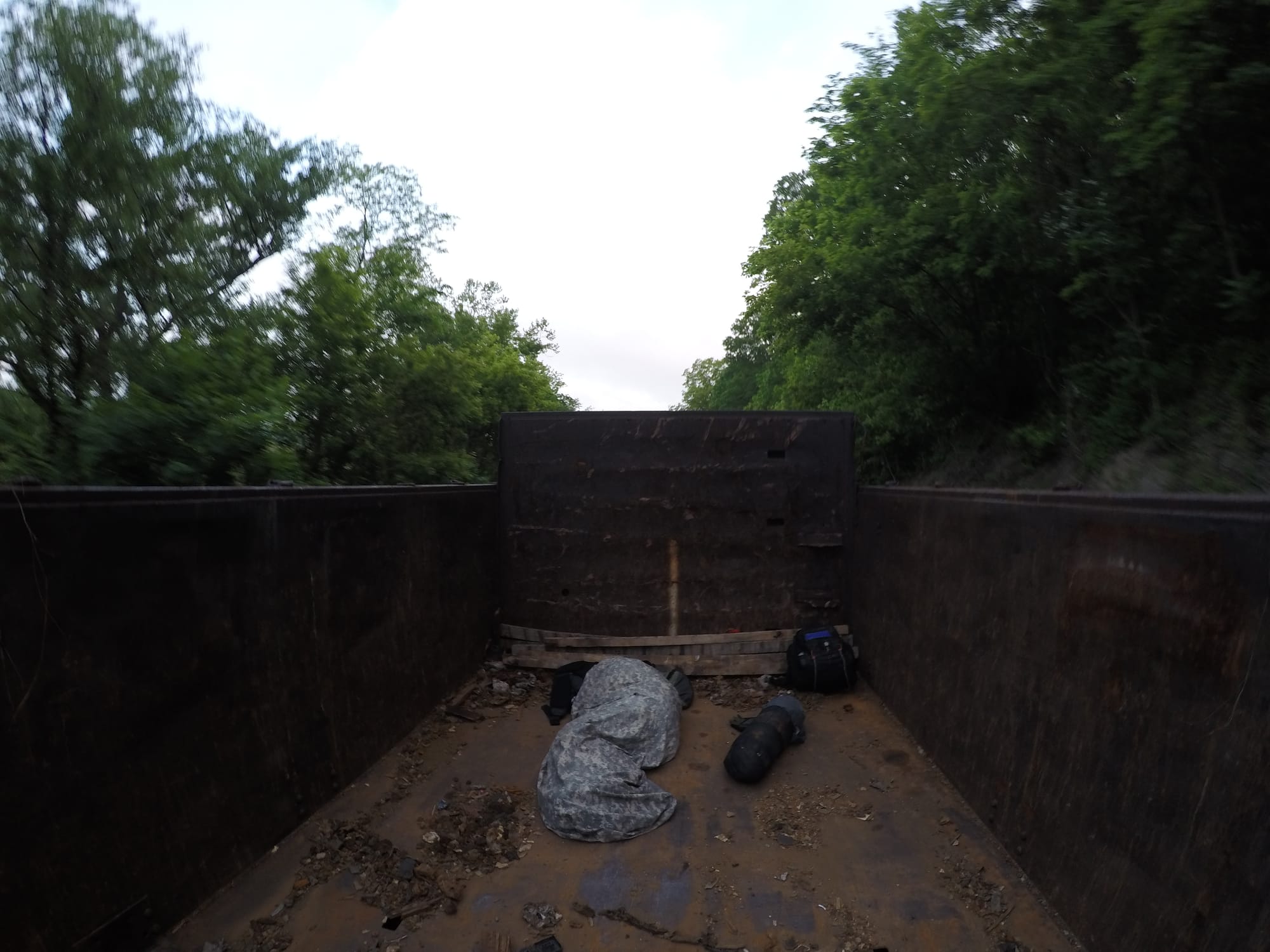
Riding inside of an empty gondola…it looks like a boxcar with the roof chopped off of it. This is a safe ride. You can ride loaded gondolas full of sand and gravel as well, but I would not ride anything where loads can shift, IE. re-bar, I beams, etc…use common sense. It goes a long way.
ALWAYS REMEMBER DO NOT FALL ASLEEP IF RIDING A LOADED CAR, YOU COULD GET DUMPED IN INDUSTRY, SO TO STAY ON THE SAFE SIDE, STICK TO RIDING EMPTY GONDOLAS OR JUST KEEP THIS IN THE BACK OF YOUR MIND.
If you are going to ride any LOADED CAR make sure you know what you’re riding…will the load shift and potentially kill you? If so, don’t ride it. The only loaded cars I have ridden have been loaded coal, loaded gravel, and loaded sand. Also, do not fall asleep and end up in industry or you might get dumped, injured or killed. But to be safe, while you’re first learning to ride steer clear of anything loaded and just wait for something empty to ride. Not knowing what you’re doing is a way to get yourself killed out there on the rails and it happens more frequently than you would think. A buddy of mine with several years of experience just died this past year due to complacency in the yard. It can happen if you don’t take trains seriously and drop your guard. RIP Rooster.
THE GRAINER
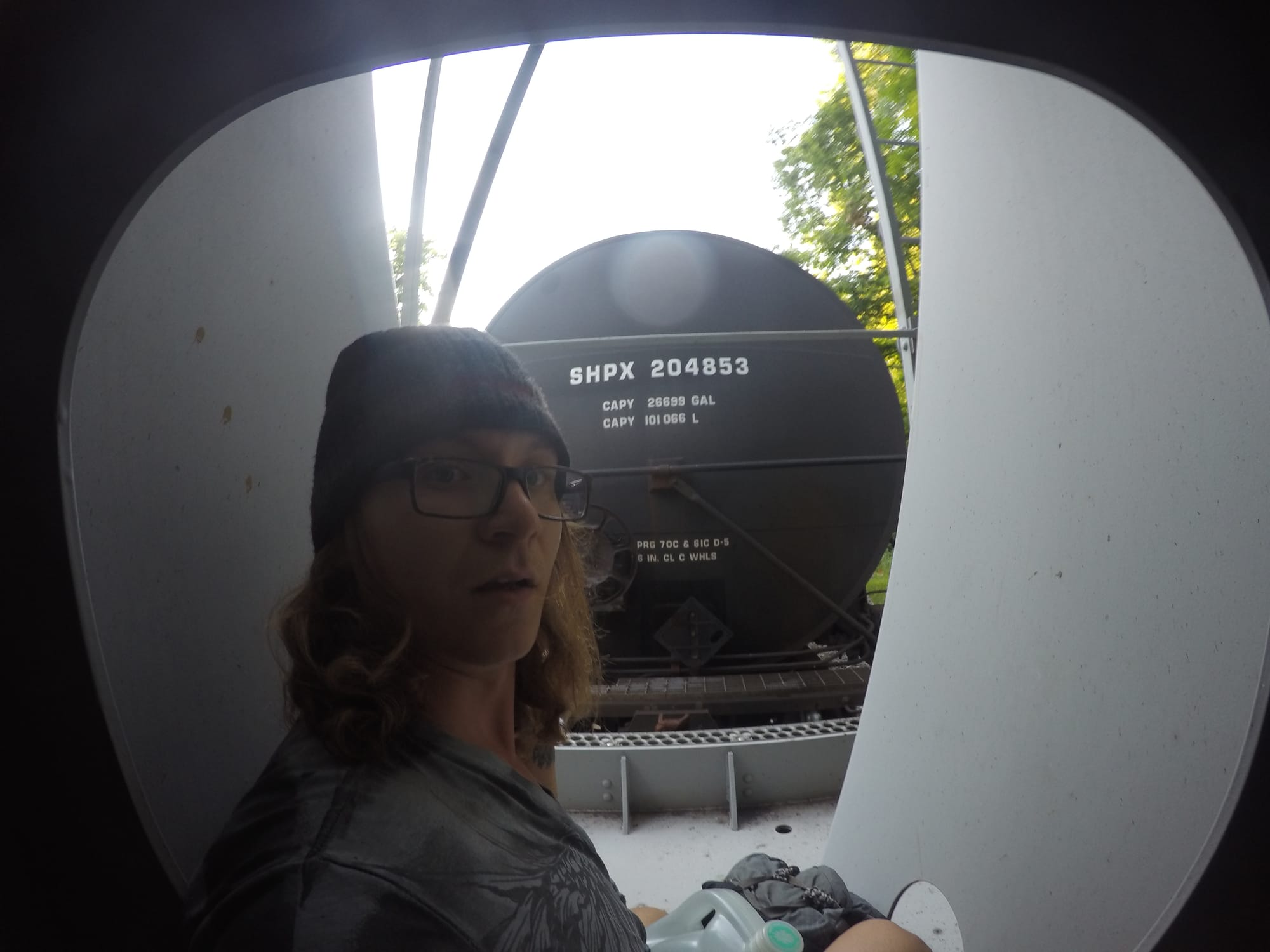
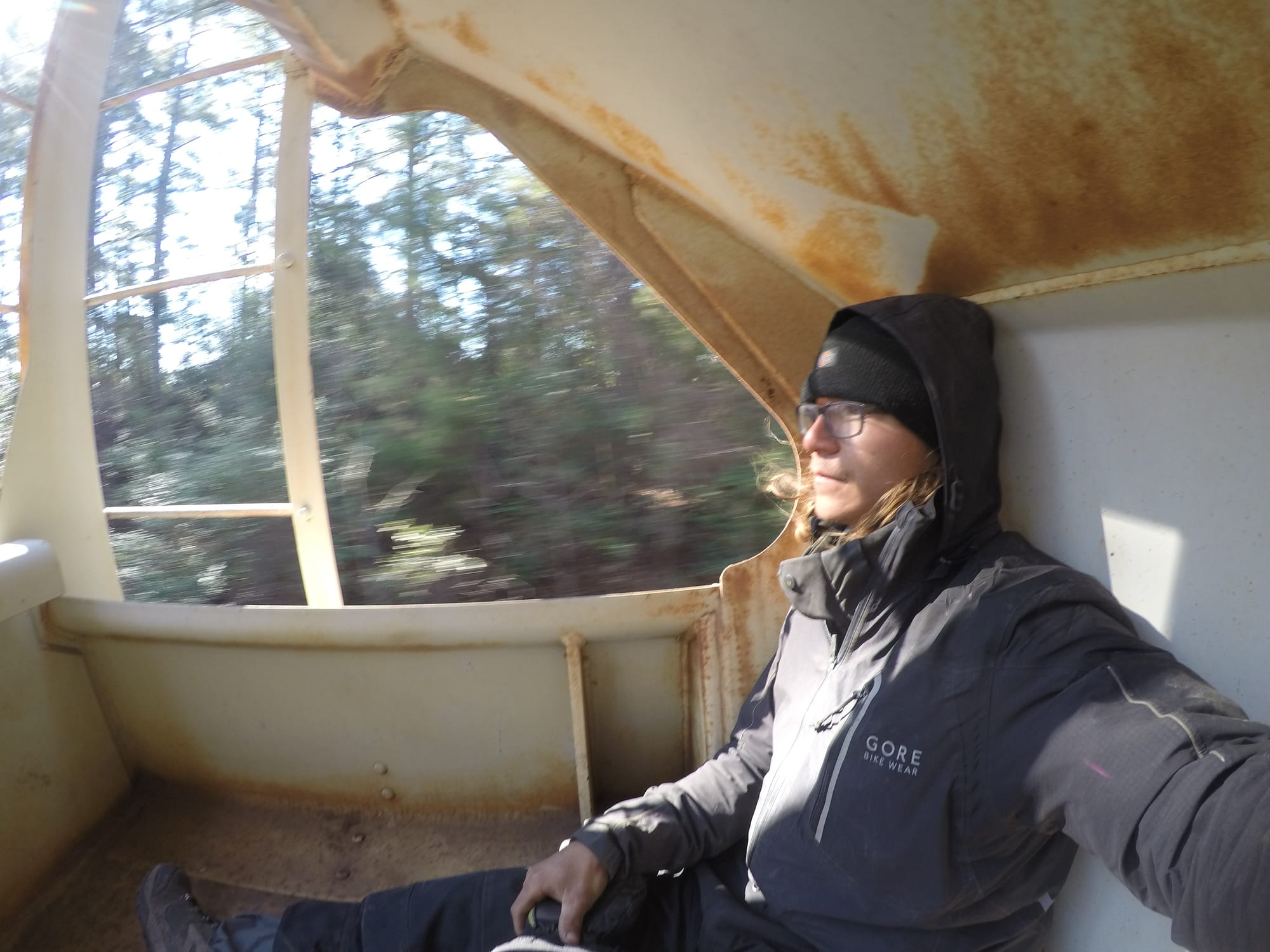
GRAINERS are one of my favorite rides. I enjoy riding dirty face on them and having the wind hit my face, but most of the time I ride clean face since it’s safer and you’re less likely to be seen by conductors, and people. The best way to spot a rideable grainer is to look for a leading edge along the freight car…if you see a leading edge then you know that it has a floor and this becomes crucial when catching on the fly because you can spot a rideable car several cars down the line and get a running start.
BNSF has a lot of suicide grainers…don’t ride them, there’s no reason to, where as Union Pacific (UP) has way more rideable grainers. The cool thing about grainers is you can stash your gear and yourself in the fox hole (if it has one), if you are small like myself, to stay hidden from the bull spotlighting the train and to hide going through yards, cities, and crossings.
They also have high wall grainers where the whole grainer car extends to the roof of the hopper car. These give you more cover from rain, but they also have less of a view.
Also, this is especially more common on the EAST coast. A lot of junk trains on the east coast are local and only go short distance…like we found out in mid spring of 2017, we spent 5 days and only traveled like 40 miles because we were riding a train with a bunch of empty gondolas and empty grainers and went nowhere. So keep this in mind. You’ll travel further distances out west on unit grain, but nothing is certain. That’s the beauty of riding though, not knowing where you’re going to end up, that’s the adventure, wandering aimlessly with no responsibilities and nothing to do.
Note: If you ever decide to ride a bunch of empties or full grainers you may end up in the middle of nowhere at a grain facility, whether it’s unit grain or not, so keep this in mind.
An easy way to tell if it is loaded or empty is by looking at the springs (coils) near the wheels. If loaded the springs will be completely compressed from the weight of the loaded car. Otherwise, it is not loaded. Another way to tell is by throwing a rock at the car itself. If it is a loud thud, then it is loaded. If it makes a loud, echoing ping noise where it sounds like the inside of the car is hollow, that’s because it is unloaded.
THE COAL CAR
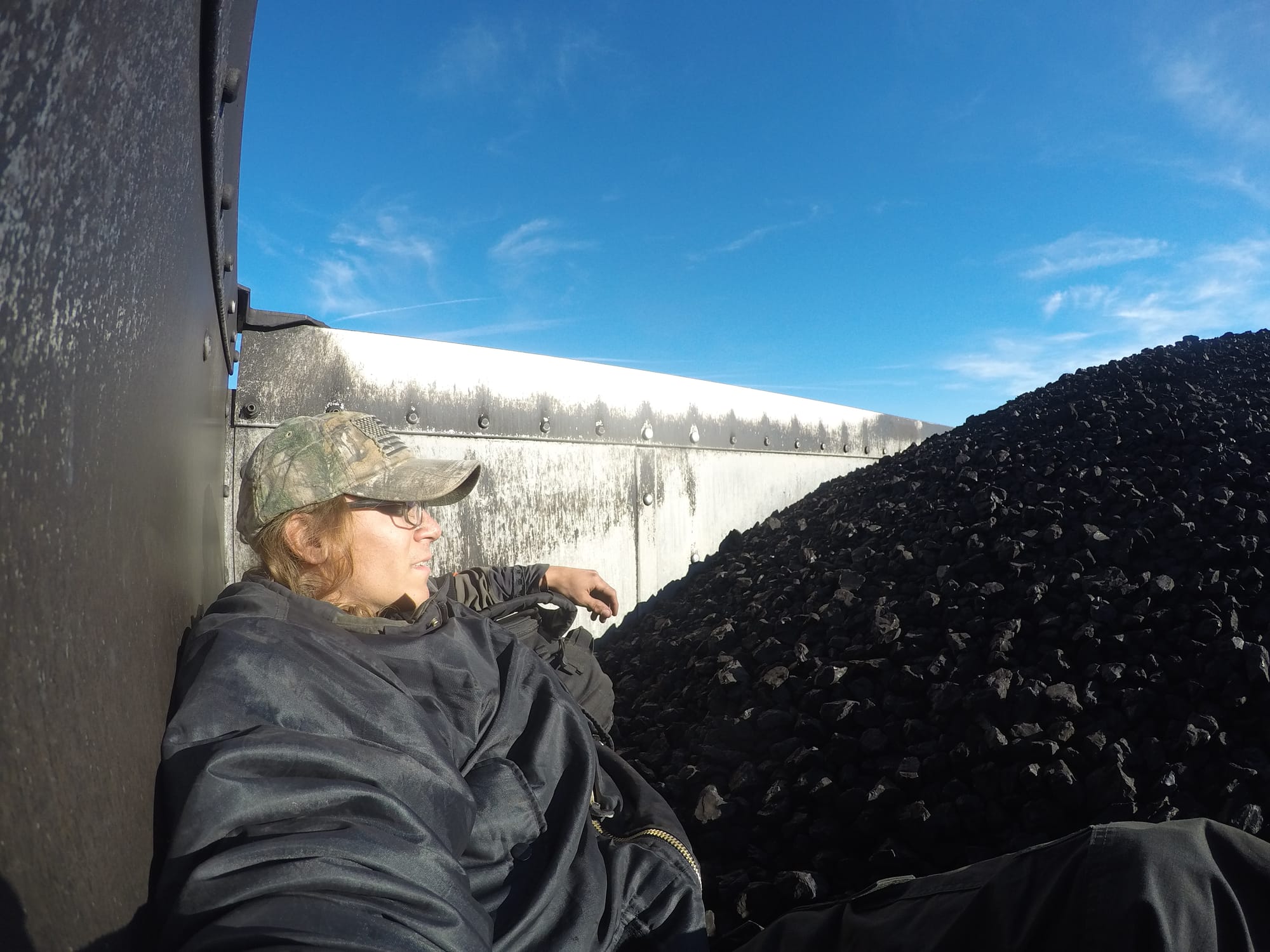
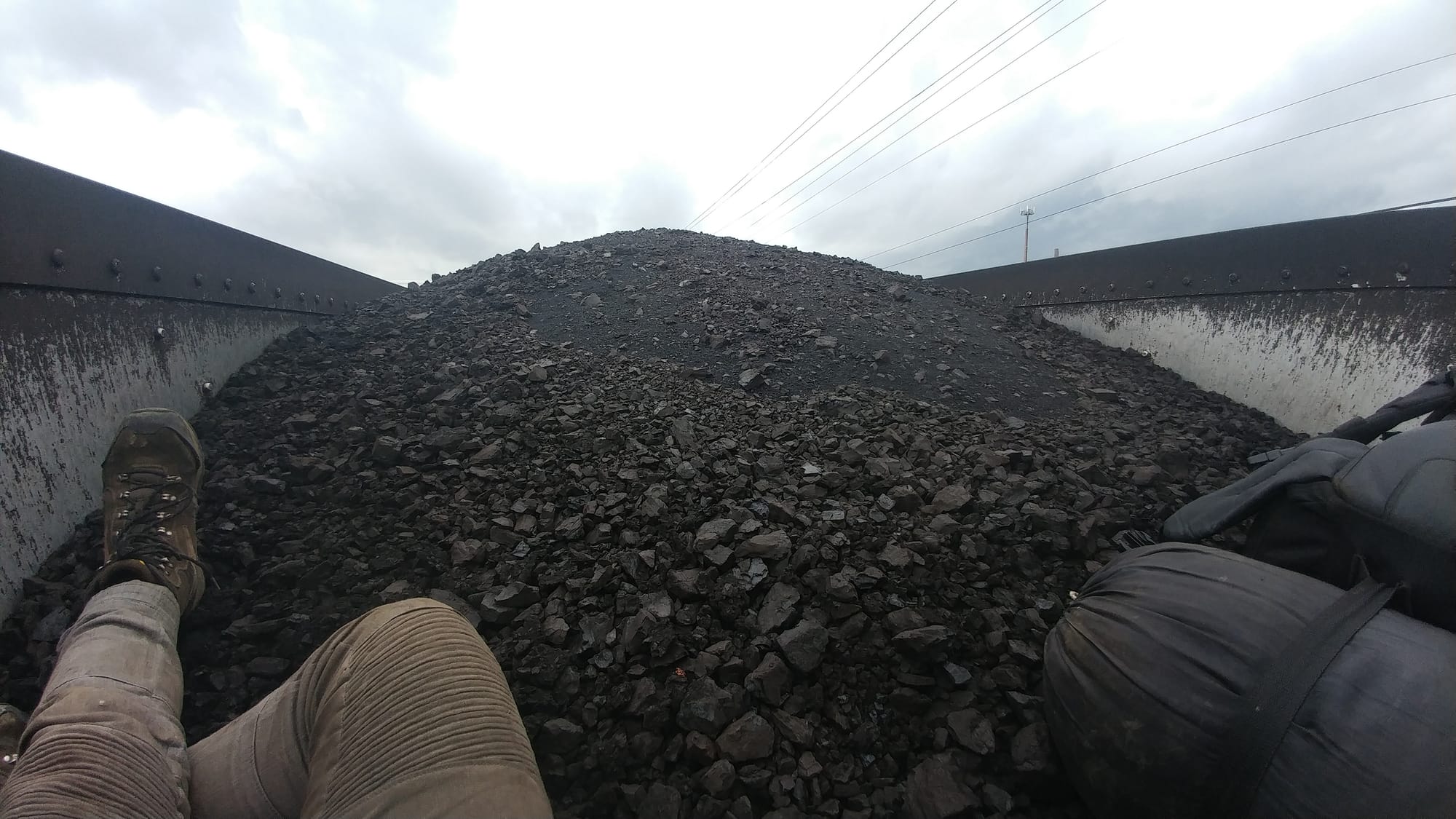
I absolutely LOVE riding loaded coal. I don’t know why. Afterwards I’m covered in coal dust and look like I just came straight from the mine. People look at me crazy when I walk down the street covered in coal dust, dirty, and it’s so hard to get out of my pores even after multiple days and showers, but I love it. With that being said riding loaded anything (gravel, sand, rebar, etc.) is dangerous.
Don’t do it if you don’t feel comfortable. Loaded coal cars, unit coal, is most likely going to industry so you could end up in the middle of nowhere. Do not fall asleep on loaded coal unless you know where you’re at because you could get DUMPED in industry which could possibly maim or kill you.
With that said, loaded coal offers slow and spectacular views of the scenery around you and is loads safer than riding empty coal.
DO NOT RIDE EMPTY COAL.
DO YOURSELF A FAVOR AND DO NOT RIDE EMPTY COAL...IT MAY BE TEMPTING, BUT IT'S NOT WORTH THE RISK. YOU NEED A ROPE TO TIE TO THE LADDER. YOU NEED TO BE ALERT EVERY TIME IT STOPS TO MAKE SURE IT'S NOT GETTING LOADED....AND YOU CANNOT FALL ASLEEP UNLESS IT'S MOVING. IT SUCKS.
WELL CARS
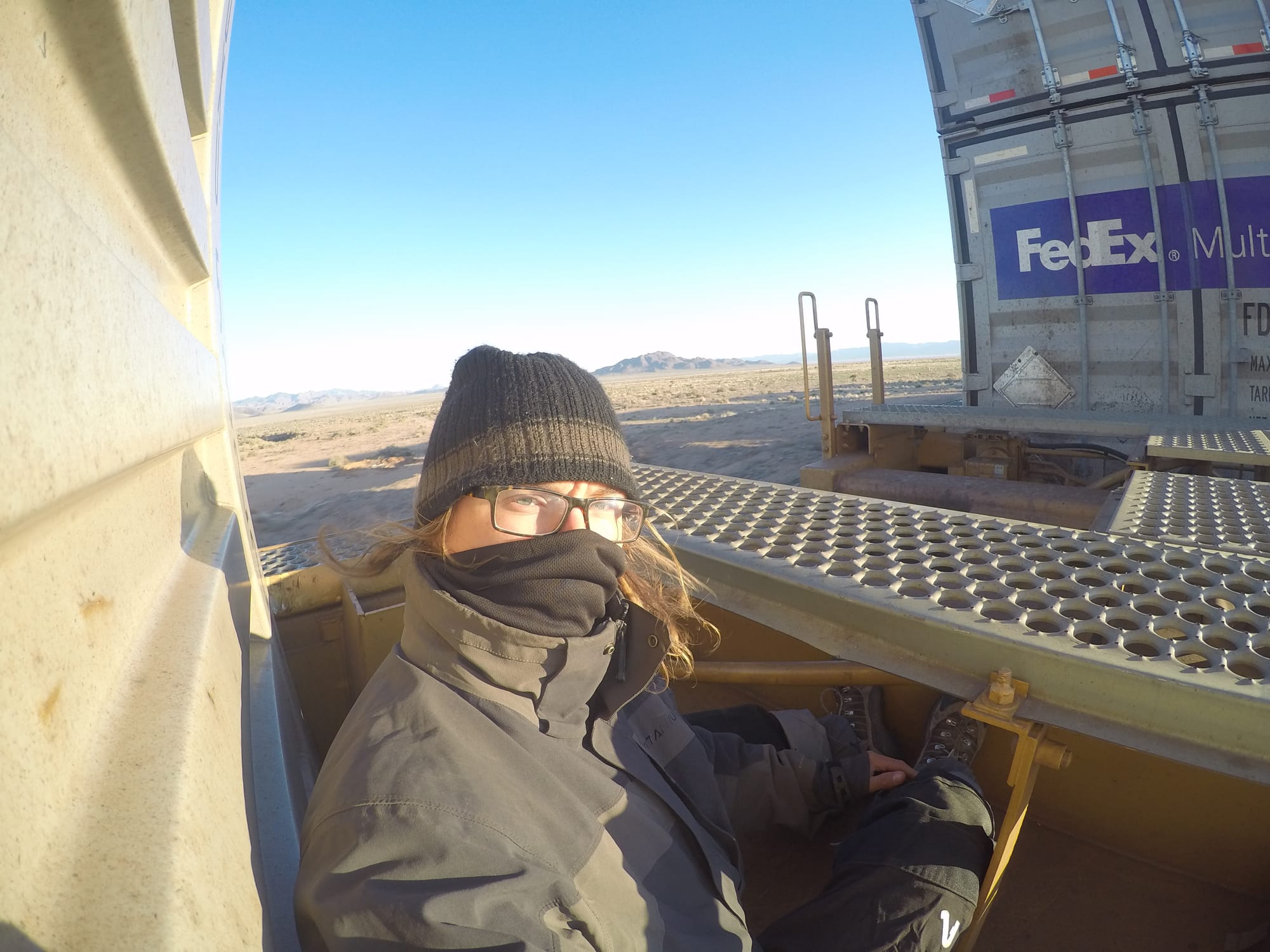
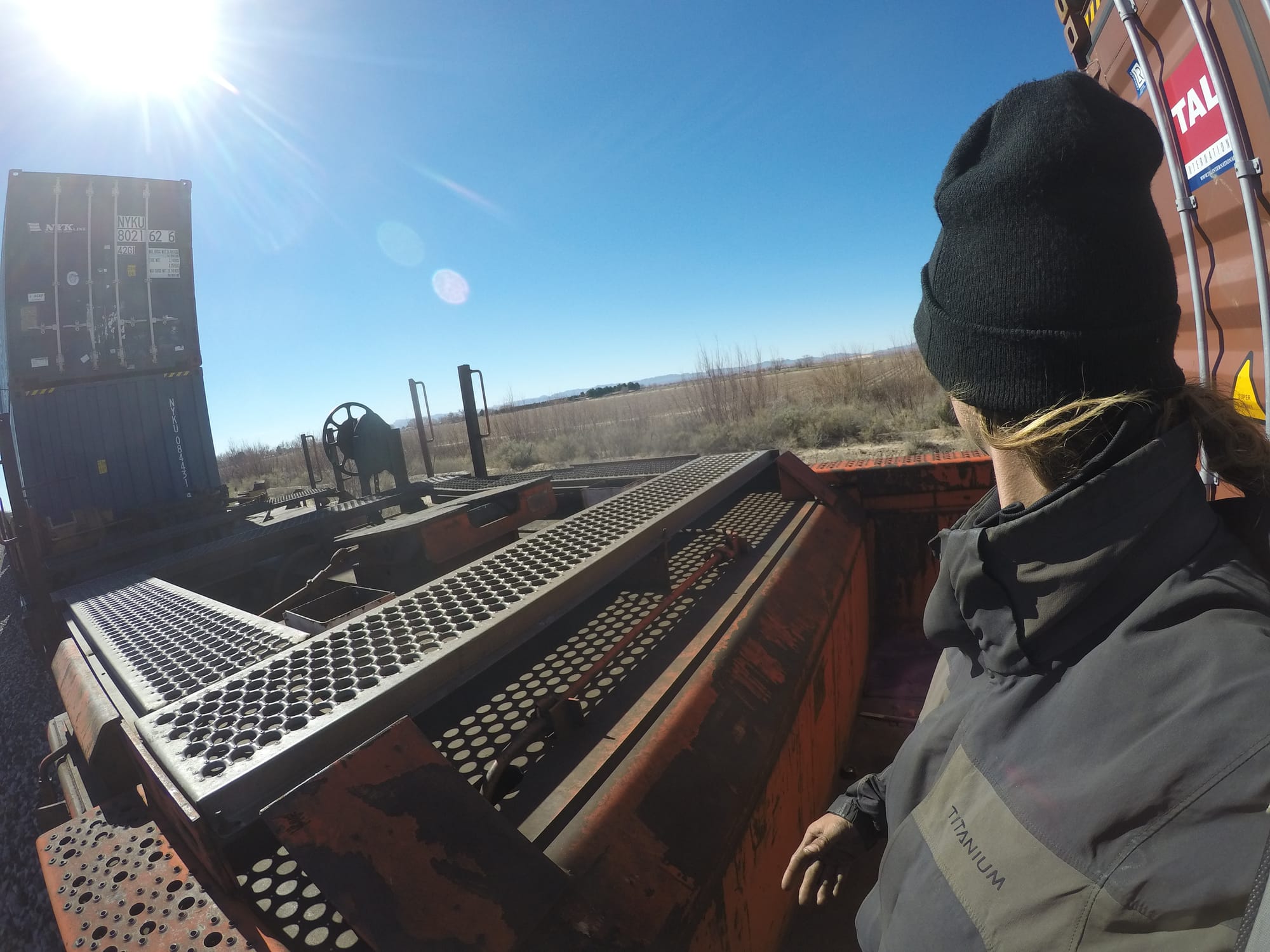
I still have trouble identifying rideable well cars. Nowadays, the railroads have been cutting costs by making much of the well cars floorless to cut weight and diesel expenses, meaning it’s harder for us to find rides. Identifying well cars will come with experience.
I do know however that most ribbed 48′ and 53′ cars, the old cars, normally have rideables. If it stops at a siding or on the mainline just roam around and check each car to find your ride, then run out of the yard and wait for it to air up or hide in a nearby bush, catching it as it creeps or as it airs up on the main.
Some well cars only have porches. Some have a porch where you can squeeze your pack and your body underneath the grate (well). Some well cars are deep wells (buckets) and very spacious (less common nowadays, but still possible). And then a vast majority of them are suicide, with the holes in the middle or the angled steel bars that look like floorless trusses.
Things to know about riding on Intermodal Double Stacks (IM/DS)…these normally take priority over many other trains on the line…but that being said you should still carry plenty of water. I once sided out for 15 hours in Carrier, Oklahoma and had to hop on a passing train because I ran out of water and town was 9 miles away so I couldn’t walk to it in the heat. Don’t assume anything because you could be riding empty IMs, which are of lower priority. Mail trains, the juice train, etc. are fast hotshots, along with a few of the trains on the highline from Minneapolis to Seattle, Washington/Portland, Oregon.
That being said the railroad normally checks them more frequently for riders so stay hidden when you should be hidden (in or going through yards, going through crossings or towns/cities, etc.). Also, when going through yards lay low. Do not jump around like a clown and try to stay hidden under the grate, both your body and your pack, to stay out of view from the eye in the sky and
workers. Sometimes there is nothing you can do and you get caught, but if you ride a lot of trains, you will pay your dues and get caught. It just happens. If this isn’t something you are willing to deal with, then you probably shouldn’t ride trains.
So what about Intermodal cars? What should I ride? Every time I run up and down the line checking for a well car to ride it ends up being suicide? Just don’t catch them on the fly and you can easily check with a rock or flashlight or climb up to see if there is a ride or not when it’s stopped.
This gives you a start on what to look for, but typically anything with a porch can be ridden although you are easily exposed to view. So your best bet is to ride IM/DS at night time, until you become more familiarized with what cars you can ride at a quick glance. It should be instinctual like with junk trains.
THE PIGGYBACK
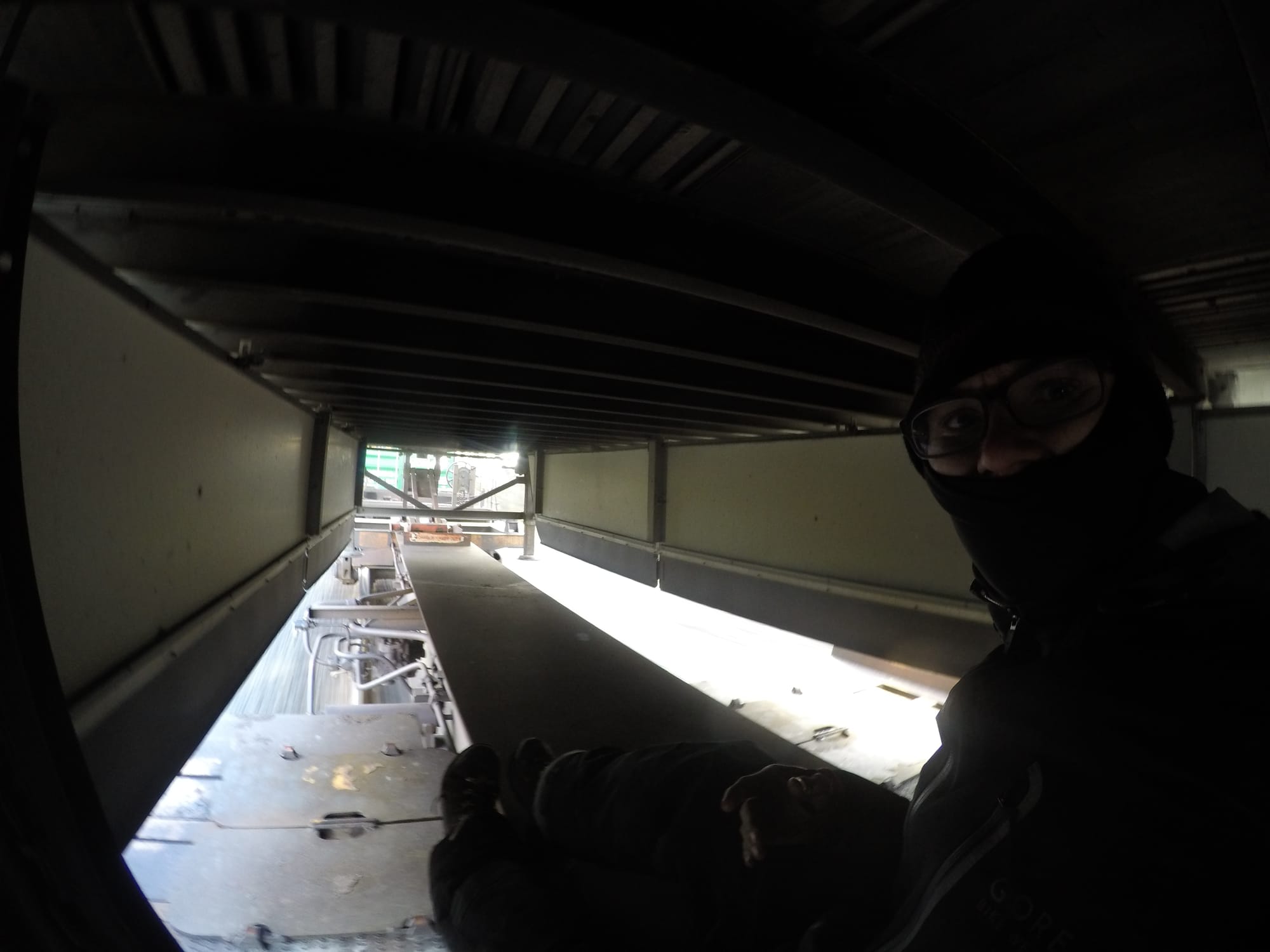
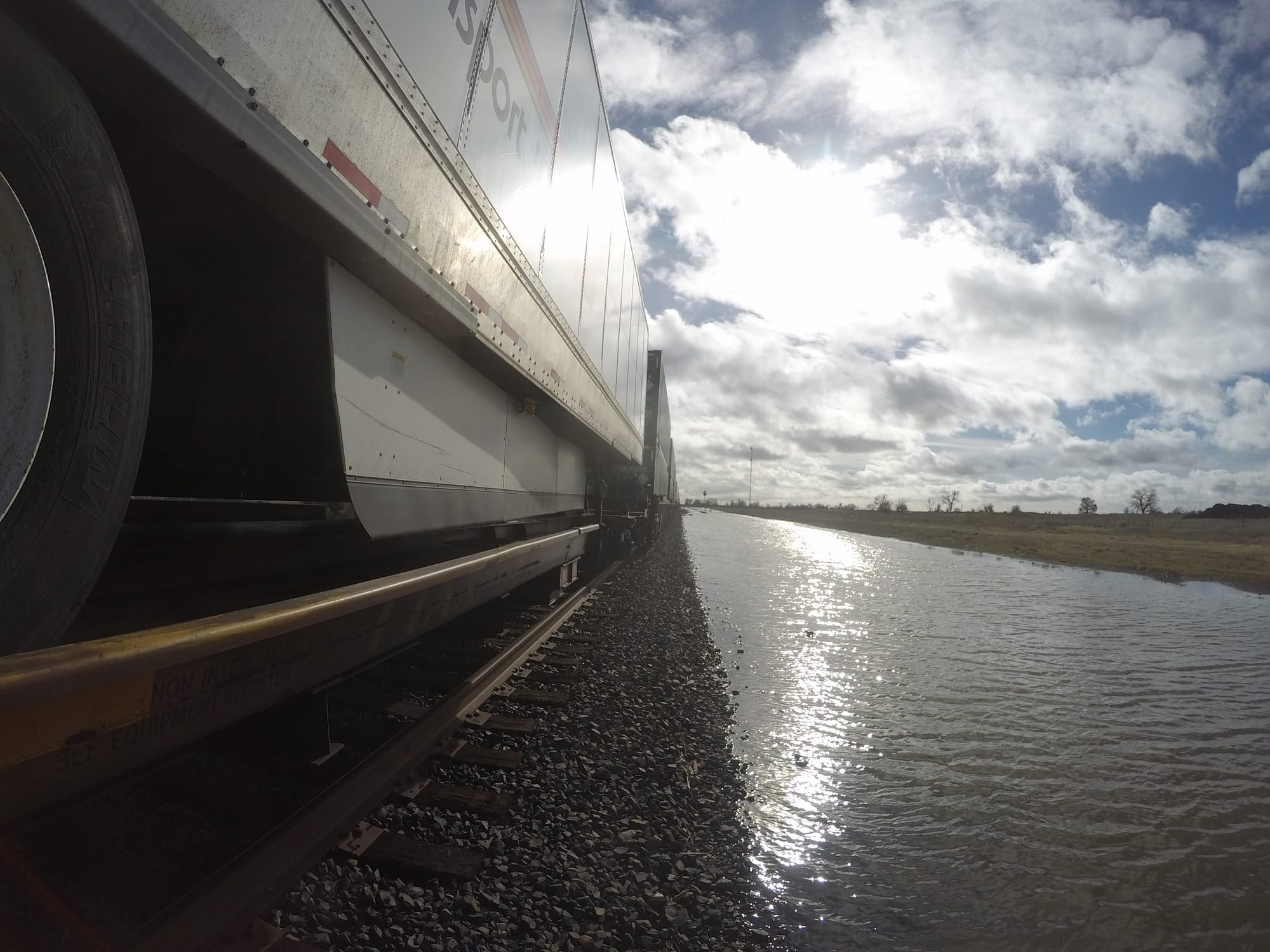
You can ride flat cars, and lumber racks if you so choose, but your chances of getting caught increase greatly while you’re out in the open. Trust me, I rode a flat car between two containers (COFC – Container on Flat Car) on a shorty IM in New Zealand and I’m really surprised no one noticed me at railroad crossings in broad daylight. With that in mind, you can ride on a TOFC (Trailer on Flat Car), specifically a piggyback or piggy for short, which is a semi-trailer on a flat car. You can ride on the spine or between the wheel well of the train, normally these are fast rides, especially if you catch the Z-train (mail train) out of the Midway Yard in Minneapolis, MN.
LOADED LUMBER
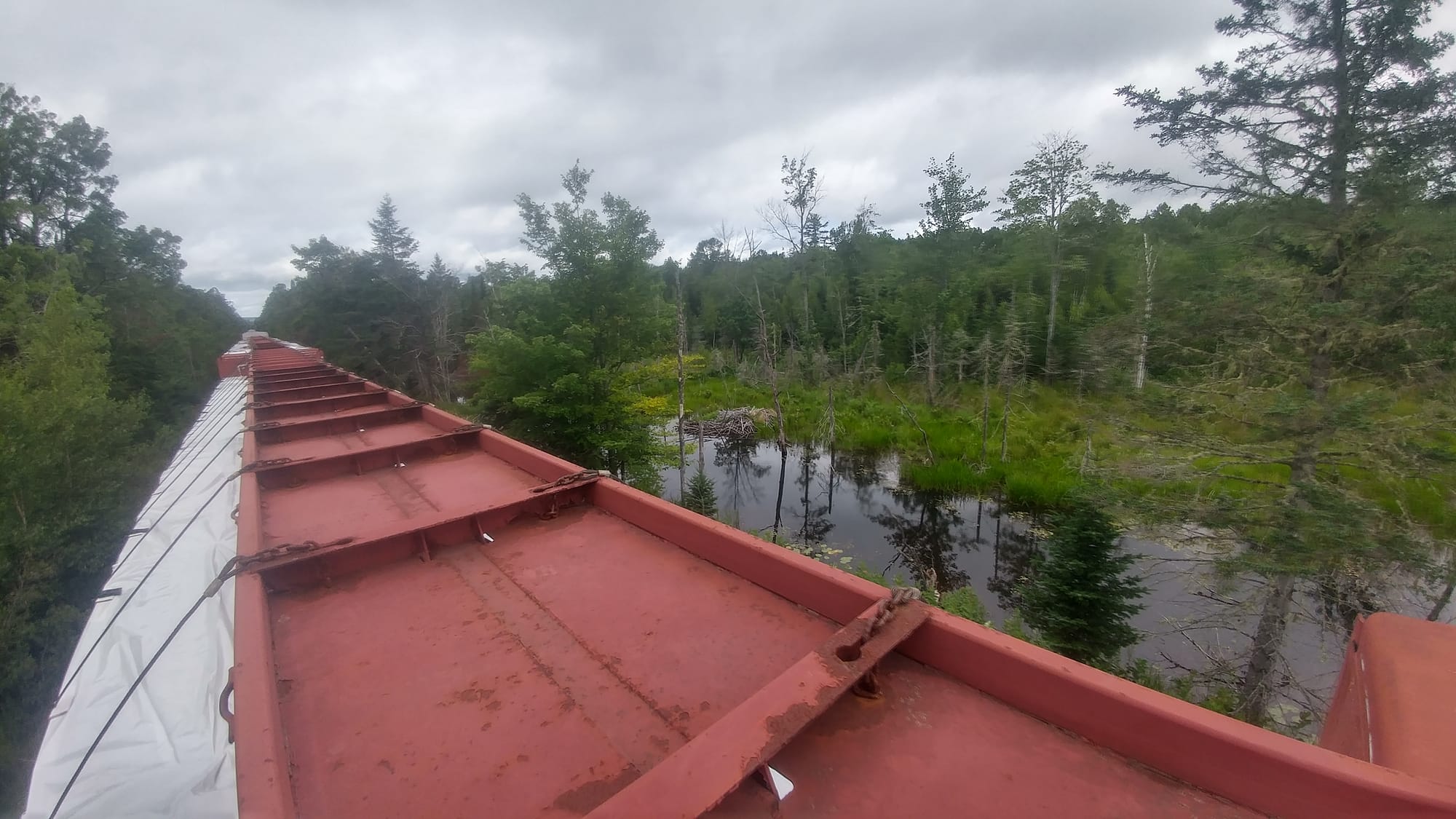
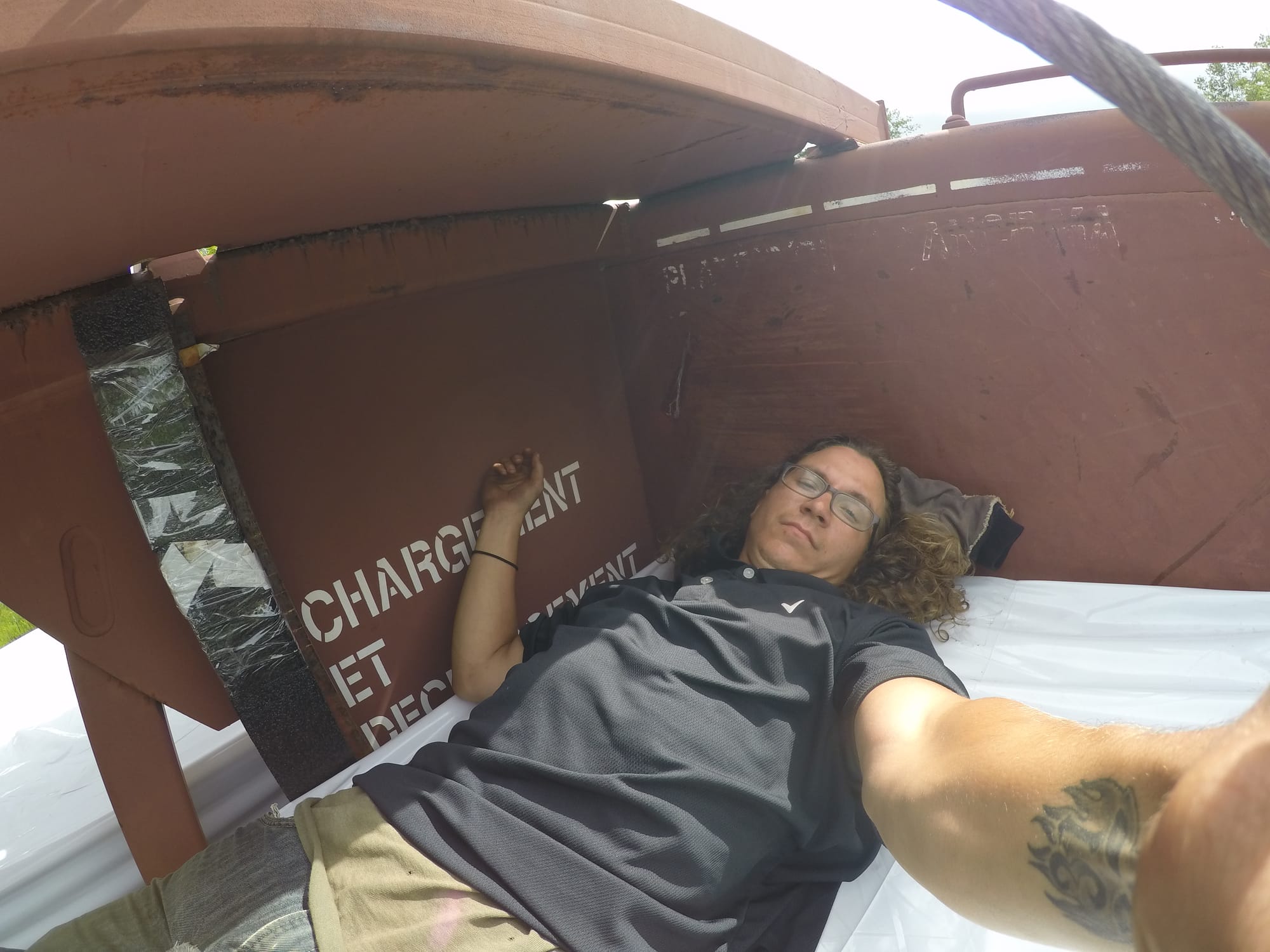
You can ride loaded lumber racks stacked three high and hide in the small space between the spine or lay on top of the stack. I’ve ridden these on several occasions riding short Class II railroad lines in the northeast. Not recommended for novice riders or for long distance travel, but if there is nothing else on the train, this is a ride.
THE UNIT
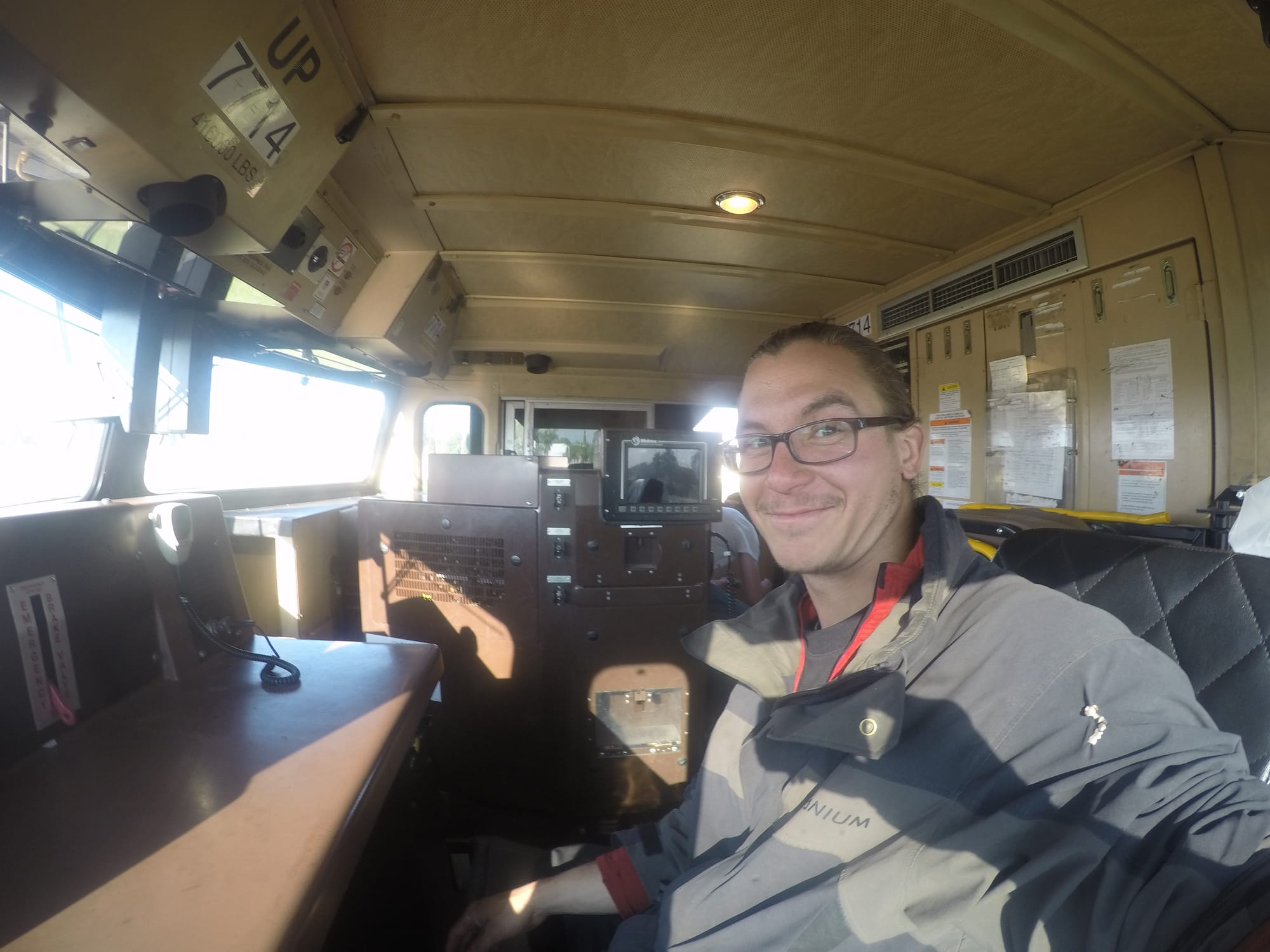
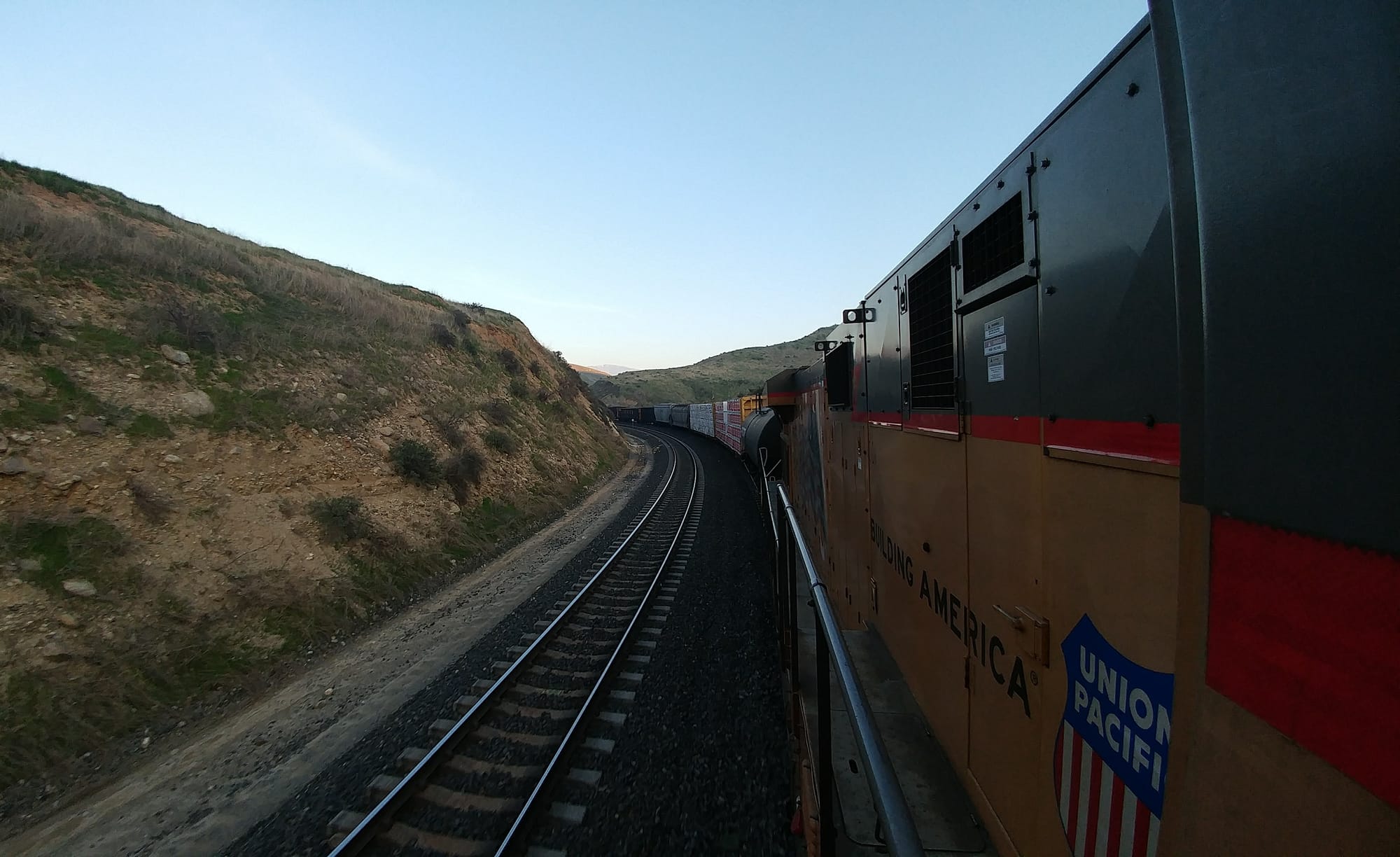
This is the unit. A lot of units nowadays are locked by the railroad companies. BNSF is known for locking about 90% of their units. There are ways to get into locked units if the nose and side door are locked, which you will figure out on your own as you train hop more frequently, but please note, there are cameras inside that record audio (not sure about video) and I believe they are starting to alarm units that are locked (some and also not completely sure if this is true). Riding the unit is the cadillac of all riding, however, even with all the perks of a toilet, electrical outlet and fridge, the crew does daily inspections and check the unit randomly so be alert and vigilant…if you get caught riding the unit you will most likely end up in jail.
Please don’t touch any fucking thing in here. Don’t touch anything! I emphasize this because time and time again I hear stories of dumb asses accidentally sounding the horn or touching controls they have no business touching. Don’t fuck with the train. If the cab light is on, leave it on, if it’s off leave it off. You can touch the A/C and such, but even still…if you are unsure about what something does then leave it the fuck alone.
SUICIDE CARS
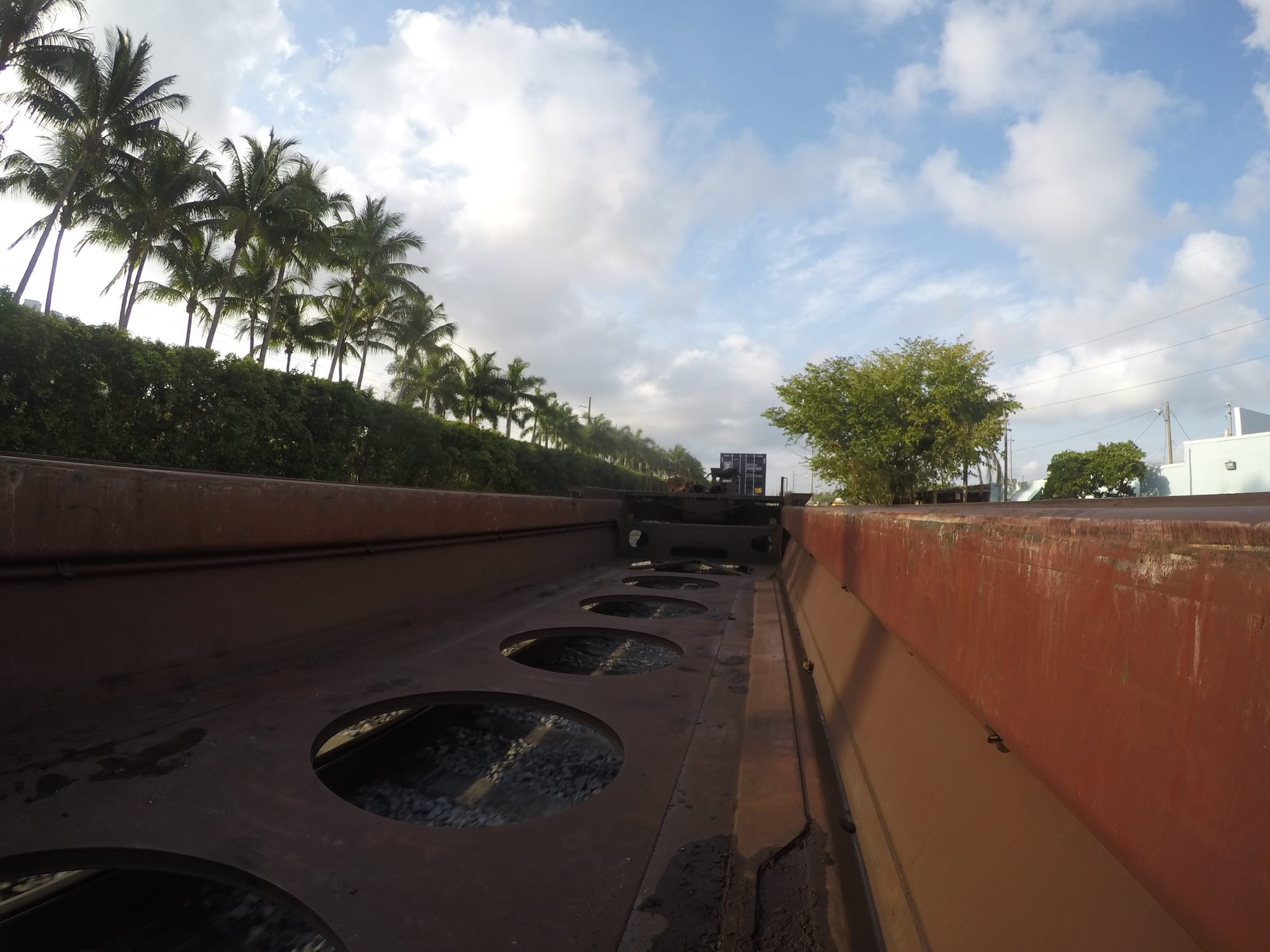
Other juicy pieces of information that will definitely help you out, are figuring out which cars to ride that have floors, and avoiding the suicides. For junk trains, your grainers with the leading edge extended the full length of the car are NOT FLOORLESS, you should scope these out as the train rolls by and stops on the main line or while it’s slowly departing the yard if you are catching on the fly (not recommended for novice riders). Why is this important? Because, if there is no leading edge and you can see the wheels then you might get caught riding suicide for 8 hours (crew change) or until the next siding. Stay safe…be smart, learn your cars before catching on the fly or wasting time searching for something to ride in the yard.
Avoid riding suicide if you don’t have to, sometimes riding the well cars with the circles cut out in the middle are ok, but please know what you’re getting yourself into. If you fall asleep it is possible you could roll into the center and end up falling to your death. This is very possible. The well cars with the floorless, angled trusses should always be avoided. You literally must stay awake for the whole ride because if you fall asleep you will fall through the floor to the tracks below and get torn to pieces. AVOID SUICIDE ALTOGETHER.
With that said, don’t catch IM/DS on the fly UNLESS YOU ARE CERTAIN IT ISN’T SUICIDE AND YOU ARE CONFIDENT IN YOUR ABILITIES TO CATCH ON THE FLY. The newer wells are more often than not suicide. It’s not worth dying out there, when you can wait on another train. Rideable well cars are becoming less and less common over the years as the railroads switch out old wells with floorless wells to save on weight and decrease fuel costs. So keep this in mind too. This does not mean you cannot find a ride. It just means it isn’t as common as it once was to find a well, deep well, porch, etc.
DESPITE THE PICTURES OF THE POLAROID KIDD, THERE’S NOTHING COOL ABOUT RIDING SUICIDE.
WHERE IS MY TRAIN GOING???
If you don’t have a railroad scanner or a crew change guide then you can use a combination of Google Maps along with these railroad maps of different companies to see the general destination of where you might be going. The North American Railroad Atlas is also available for download too if you want something more extensive to look at. You can have a general idea of where your train is going based on the yard you are in, the direction of the train and the front engine. For instance, if you are in a CSX yard with a CSX train leaving westbound out of East Deerfield, for instance, then you are most likely going to Binghamton or Rotterdam Junction.
Companies generally stick to their own trackage rights. So CSX trains travel on CSX lines, which is why a CSX train map is helpful for a CSX yard(s). Seldom do trains run on other trackage because they must pay a premium to the railroad that owns the tracks. Reroutes sometimes happen like when Pan Am had to use VRS lines to reroute their trains around the pass when the Hoosac Tunnel collapsed, but again, Pan Am paid extra to run these trains since they do not own VRS tracks.
Download Google Earth KMZ Files of Railways HERE! Check out the Interactive Open Railway Map!
Canadian Rail Atlas – Interactive map for Canadian Pacific and Canadian National
North American Railroad Atlas – You can search z-library, but the newest I could find was like 1999. I don’t know how relevant that even is today.
TRAIN MAPS

SOUNDS TO LISTEN FOR IN THE TRAIN YARD
So you infiltrated the train yard and found a nice spot to catch out near the main lines and the departure tracks. What exactly are you looking for?
You are listening for particular sounds in the yard to determine if your train is going anywhere. Do you hear a hissing sound from the couplers? This most likely means the train is airing up for departure (if you are in the right part of
the yard)? Did a front engine get attached to your train in the departure yard? Was a FRED (rear end unit that blinks red) attached to the end of the train? Are workers checking the air hoses and working on your train getting ready for departure (do not get on yet if this is the case, you will be seen)? All of these are indications that your train might be leaving soon. When that is, who knows? Unless you ride with a scanner and know the symbols and yard lingo you won’t know when the train is leaving or exactly where it is going, but I look for these four things before boarding my preferred train car and entering the yard.
1. IS IT ON THE MAIN LINE OR IN THE DEPARTURE YARD? IF IT’S ON THE MAIN LINE IT’S LIKELY WAITING ON A CREW BEFORE LEAVING THE YARD SO REALLY YOU ARE JUST WAITING ON IT TO AIR UP BEFORE HOPPING ON A RIDEABLE CAR. IF IT’S IN THE DEPARTURE YARD IT MIGHT TAKE A LITTLE LONGER TO LEAVE, BUT THE SAME RULE APPLIES, LISTEN FOR THE AIR.
2. IS THERE A FRONT ENGINE ON THE TRAIN THAT IS NOT A YARD DOG? WHAT’S A YARD DOG YOU ASK? A YARD DOG WORKS THE TRAINS IN THE YARD, MEANING IT TAKES BLOCKS FROM THE CLASSIFICATION TRACKS AND SHUNTS THEM TOGETHER TO FORM A TRAIN FOR DEPARTURE IN THE FUTURE. TYPICALLY IT CONSISTS OF A 3 DIGIT NUMBER ON THE FRONT ENGINE WITH A BLINKING LIGHT (THIS APPLIES FOR UNION PACIFIC) HOWEVER, IT’S PRETTY SIMILAR ACROSS THE BOARD WITH FEC, BNSF, CSX, NS, ETC. THE NUMBER MIGHT NOT BE 3 DIGITS, IT COULD BE 4 DIGITS, BUT THE BLINKING LIGHT IS NORMALLY A DEAD GIVEAWAY. ALONG WITH THE DING, DING, DING, DING, DING. IF IT PULLS OUT OF THE YARD AND BACKS INTO IT MULTIPLE TIMES REMEMBER THE FRONT ENGINE NUMBER AND THIS IS MOST LIKELY YOUR YARD DOG BUILDING A TRAIN. DO NOT HOP ON THESE TRAINS AS THEY ARE WORKING AND NOT GOING ANYWHERE EXCEPT BACK INTO THE YARD.
3. DOES IT HAVE A FRED ATTACHED? IF A FRED IS NOT ATTACHED THEN YOUR TRAIN IS NOT LEAVING. FREDS MEAN YOUR TRAIN IS EITHER DEPARTING IN THE NEXT FEW HOURS OR YOUR TRAIN HAS JUST ARRIVED IN THE YARD AND THEY HAVE NOT TAKEN THE FRED OFF YET. THIS IS WHY IT’S IMPORTANT TO KNOW WHERE THE DEPARTURE TRACKS ARE VERSUS THE CLASSIFICATION TRACKS.
4. IF ALL THE ABOVE HOLDS TRUE, DID YOU HEAR IT JUST AIR UP? IF YES, THEN GET THE FUCK ON, IT SHOULD BE LEAVING MOMENTARILY (AIR UP = HISSING NOISE).
Other important sounds include the WOOOOOOOSH sound. Why is this sound important and what makes it different than the hissing noise the train makes when airing up? Well, it’s quite simple. When you hear that loud WOOOSH noise, that sounds like a pop, it means the engineer cut the power and the front engine detached from the train, which means get off the train. In some cases, like riding in the Northeast, trains work many yards and continue onward, but this comes with experience and riding lines several times. Otherwise, you should always get off the train when power is detached unless you know for a fact it will continue onward and is not terming in that yard. They might be adding blocks to the train, cutting the train into different strings, etc. You won’t know unless you have a scanner. But, I don’t ride with a scanner, so normally I get off and wait along the tracks. If the front engine reconnects and it airs up I hop back on, if not I don’t and find another train. There is always another train it’s just a matter of waiting.
Lastly, this is a big one, if your train stops right outside the yard and comes to a complete stop. But, several minutes later or even a few minutes later, all of a sudden it starts rolling into the yard WITHOUT AIRING UP, get off the train it’s dying in the yard. Don’t waste your time getting caught running around the classification yard. This is really dangerous and in the event you end up in the few hump yards left in America, this is even more dangerous. Be smart. Get off the train and find a nice hop spot to grab another train.
This is not a fully complete comprehensive guide to train hopping for greenhorns, but it’s a start. A lot of this information came from months/years of riding and a few years of compiling different threads and information I read on the Internet. Do not hold me accountable in anyway for any choices you make with the content I have posted, but please if you want to experience the freedom of riding a train(s) the most important section in this whole guide is train safety in and around the yard. Also, if you can, try to make your first few rides with an experienced rider.